
Euphoniums Brass Instruments: What They Are & How They Work
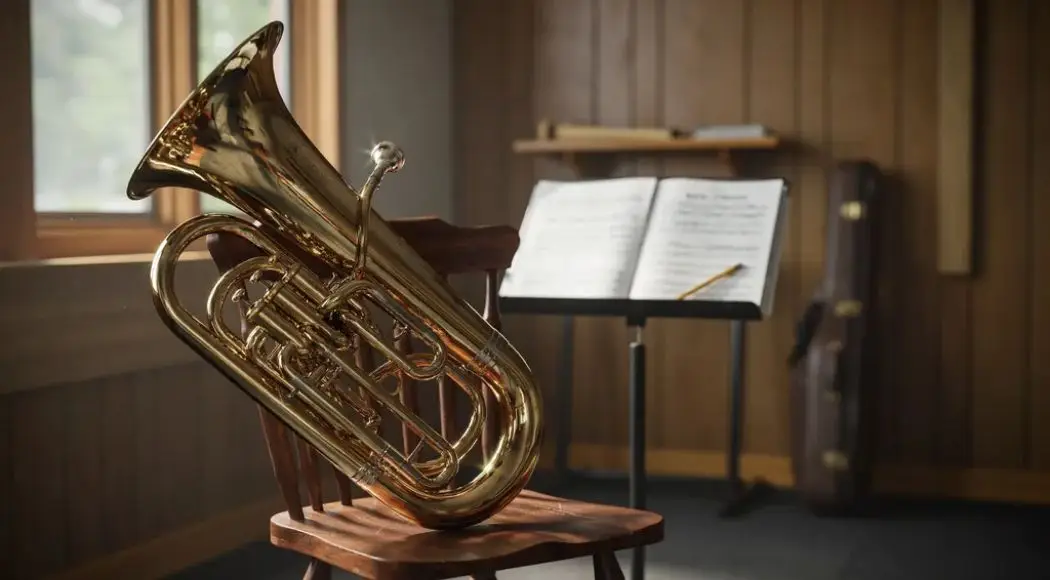
Close your eyes and imagine a sound sitting perfectly between the thunderous depth of a tuba and the piercing brilliance of a trumpet. Warm, rich, velvety, capable of singing a lyrical melody one moment and anchoring a full brass ensemble the next. That sound belongs to the euphonium, and it is one of the most underappreciated voices in all of Western music.
- What Are Euphoniums, Brass Instruments?
- Background and History: How the Euphonium Was Born
- Types of Euphoniums Brass Instruments
- How Euphoniums Brass Instruments Work: The Playing Process
- Where Euphoniums Brass Instruments Are Used in 2026
- Euphoniums vs Related Brass Instruments: Comparison
- Why Euphoniums Brass Instruments Matter in 2026
- Conclusion
Euphoniums, brass instruments, occupy a unique and irreplaceable position in the world of wind music. Found at the heart of brass bands, concert bands, military ensembles, and wind orchestras across the globe, the euphonium delivers a tonal quality that no other instrument in its family can replicate. Music has always shaped culture in profound ways, from classical brass bands performing in Victorian parks to modern artists like country music star Lainey Wilson who prove that musical artistry continues to capture the world’s imagination in 2026.
This guide changes that. Whether you are a student considering your first instrument, a musician researching the brass family, or simply someone who heard that unmistakable warm tone and wanted to understand it better, everything you need to know about euphoniums and brass instruments is here. For a deeper understanding of how euphonium construction and acoustic design developed from the 1840s to the present day, the Organology Musical Instruments Encyclopedia provides comprehensive classification and historical documentation.
What Are Euphoniums, Brass Instruments?
Euphoniums, brass instruments, are classified as valved, conical-bore aerophone wind instruments. The term “euphonium” derives from the Greek word “euphonos,” meaning “well-sounding” or “sweet-voiced,” a name that perfectly captures the instrument’s defining characteristic.
The Hornbostel-Sachs universal instrument classification system categorizes the euphonium as 423.231.2, a valved bugle with a wide conical bore. This technical classification tells the core story of what makes the euphonium distinct from its close relatives:
- Conical bore The tubing gradually widens from mouthpiece to bell, unlike the cylindrical bore of the trombone or trumpet. This conical expansion is the primary reason for the euphonium’s warmer, rounder tone
- Valved: Three or four rotary or piston valves allow the player to access the full chromatic scale
- Brass construction The body is made from brass or yellow brass with a lacquer or silver-plate finish
- Tenor-bass range The instrument sounds in the tenor-bass register, making it one of the lowest-voiced melodic brass instruments in regular use
Background and History: How the Euphonium Was Born
From Ophicleide to Modern Euphonium
The history of euphoniums and brass instruments begins in the 1820s, when the invention of the modern valve mechanism transformed the entire brass family. Before valves, brass instruments could only produce the natural harmonic series, a limited set of pitches determined entirely by tube length.
The invention of the modern valve apparatus in the 1820s led to the independent development of many brass instruments. Valves made it possible to play even lower in the harmonic series. The military band master Wilhelm Wieprecht is credited with inventing the first tuba in 1835 along with instrument maker Johann Moritz. Three years after the invention of the bass tuba, Moritz introduced the tenor tuba, an instrument with similar construction to the bass tuba but designed to play at a slightly higher range. Taking inspiration from the tenor tuba, Ferdinand Sommer created an instrument with thicker, more tapered tubes and called it the euphonium.
This places the creation of the modern euphonium firmly in 1843—making 2026 the instrument’s 183rd anniversary year. Invented in 1843 by Ferdinand Sommer of Weimar, the euphonium was derived from the valved bugle and quickly became the leading instrument in the tenor-bass range in military bands. For the complete verified account of the euphonium’s definition, history, and acoustic properties, Encyclopaedia Britannica remains the most trusted reference source available.
Key dates in euphonium history:
| Year | Development |
| 1820s | Valve mechanism invented; transforms entire brass family |
| 1835 | Wilhelm Wieprecht and Johann Moritz invent the tuba. |
| 1838 | Moritz introduces the tenor tuba |
| 1843 | Ferdinand Sommer creates the euphonium from tenor tuba |
| 1840s–1860s | Adolphe Sax develops competing saxhorn family |
| 1880s–1900s | British brass band movement establishes euphonium as primary solo voice |
| 1969 | International Tuba Euphonium Association (ITEA) founded |
| 2026 | The euphonium maintains active role in brass bands, concert bands, and wind ensembles globally |
The euphonium emerged in its current form in the mid-19th century, when it was created by adding valves to the tuba family of instruments to make it more versatile and able to play higher ranges. Known for its rich, mellow tone, the euphonium plays a significant role in both the harmonic and melodic elements of musical groups.
Types of Euphoniums Brass Instruments
Not all euphoniums brass instruments are identical. The instrument exists in several distinct configurations, each suited to different performance contexts and player levels.
Compensating vs Non-Compensating Euphoniums
Compensating euphoniums feature additional tubing within the valve section that corrects the intonation problems inherent in multi-valve combinations. Developed by David Blaikley in 1874, the compensating system is the standard for professional performance instruments. Non-compensating models are simpler and less expensive, making them suitable for beginners and students.
Three-Valve vs Four-Valve Euphoniums
| Configuration | Best For | Pitch Range |
| Three-valve | Students, beginners, marching | Standard range |
| Four-valve | Professional, solo performance | Extended low range; improved intonation |
| Four-valve compensating | Professional concert/band use | Full chromatic range with corrected intonation |
The fourth valve, positioned for the left-hand thumb or right-hand index finger depending on the model, extends the low range downward and provides alternative fingerings for improved intonation across the full range.
Bore Size Classifications
| Bore Type | Internal Diameter | Tonal Character |
| Small bore | 0.562–0.578 inches | Brighter, more flexible |
| Medium bore | 0.578–0.590 inches | Balanced warmth and projection |
| Large bore | 0.590–0.650+ inches | Fullest, darkest, most resonant tone |
How Euphoniums Brass Instruments Work: The Playing Process
Understanding how euphoniums, brass instruments, produce sound requires understanding the physics of brass instrument acoustics.
The Sound Production Mechanism
- Embouchure vibration The player presses lips firmly against the cup-shaped mouthpiece and buzzes them together. This lip vibration is the original sound source; the instrument itself amplifies and shapes it
- Air column resonance The buzzing lips set the air column inside the tubing into vibration. The specific frequency of this vibration is determined by the effective length of the air column
- Valve operation Each of the three or four valves, when depressed, adds a specific length of additional tubing to the main air column: the first valve adds a whole tone, the second adds a semitone, and the third adds a tone and a half. Combinations of valves produce the full chromatic scale
- Conical bore amplification As the vibrating air column travels through the gradually widening conical tube, it is shaped and amplified. The wide conical bell flare at the end radiates the sound outward with the euphonium’s characteristic warmth and roundness
This conical bore design is the single most important acoustic feature distinguishing euphoniums brass instruments from cylindrical-bore instruments like the trombone. The euphonium, with its warm sound and conical bore, plays a vital role in different musical contexts, from concert bands to marching bands and beyond.
Where Euphoniums Brass Instruments Are Used in 2026
British Brass Band Tradition
The British brass band tradition, dating from the 1840s industrial era in northern England, placed the euphonium at the center of its instrumentation. A standard British brass band includes two euphoniums, with the principal euphonium typically assigned the most demanding solo passages in the repertoire.
In 2026, the brass band tradition remains thriving and competitive. The British Open Brass Band Championship and the National Brass Band Championships continue to attract top-level performers, with euphonium soloists consistently among the most celebrated voices in the genre.
Concert Band and Wind Ensemble
In American and European concert band tradition, the euphonium occupies the tenor voice of the brass section, frequently doubling the trombone line an octave higher or carrying independent melodic passages. Composers including Percy Grainger, Ralph Vaughan Williams, and John Philip Sousa wrote significant euphonium parts into their band works.
Military and Ceremonial Music
Military bands across the United Kingdom, United States, and Commonwealth nations have featured euphoniums in their instrumentation since the mid-19th century. The US Marine Band, the Household Division Bands, and the Band of the Royal Marines all maintain active euphonium sections.
Solo and Chamber Performance
The euphonium solo repertoire has expanded significantly since the 1970s. Landmark works including Wilfred Heaton’s Contest Music, Philip Sparke’s Pantomime, and Martin Ellerby’s Euphonium Concerto No. 1, have established the instrument as a credible solo voice capable of demanding virtuosic writing.
Euphoniums vs Related Brass Instruments: Comparison
| Feature | Euphonium | Baritone Horn | Tuba | Trombone |
| Bore type | Conical | Conical (narrower) | Conical | Cylindrical |
| Valves | 3–4 | 3 | 3–6 | Slide (no valves) |
| Range | Tenor-bass | Tenor-bass | Bass-contrabass | Tenor-bass |
| Tone character | Warm, dark, full | Lighter, brighter | Very deep, full | Bright, direct |
| Primary use | Brass band, concert band | Brass band, marching | Orchestra, concert band | Orchestra, band |
| Bell direction | Forward-facing | Forward-facing | Upright or forward | Forward-facing |
Why Euphoniums Brass Instruments Matter in 2026
The euphonium is a fascinating and somewhat underappreciated brass instrument. Often found in brass bands, military bands, and wind ensembles, it has a sound and presence that can captivate listeners.
In 2026, several factors are driving renewed interest in euphoniums brass instruments:
- Educational growth: School band programs in the UK and USA have expanded euphonium inclusion as music educators recognize its accessibility for students transitioning from smaller brass instruments
- Online performance communities YouTube channels and TikTok accounts dedicated to brass band and euphonium performance have collectively accumulated hundreds of millions of views, introducing the instrument to entirely new generations
- Competitive brass banding revival The British brass band competition circuit has seen increased participation, with euphonium players like Steven Mead and David Childs maintaining global recognition as the instrument’s leading ambassadors
- Crossover repertoire Contemporary composers are writing euphonium into jazz, folk, and crossover ensembles, expanding its presence beyond traditional band contexts
Steven Mead, widely regarded as the world’s foremost euphonium soloist, has performed concertos with orchestras and brass bands across 55 countries, recorded more than 50 albums, and published educational method books that have been adopted by conservatories globally. His career is the single strongest proof of the instrument’s capacity for genuine virtuosic expression at the highest professional level.
Conclusion
Euphoniums brass instruments represent one of the most musically complete voices in the entire wind instrument family: warm enough for lyrical melody, agile enough for virtuosic passage work, powerful enough to anchor a full brass ensemble, and expressive enough to carry a concerto movement alone.
Key takeaways:
- Ferdinand Sommer created the euphonium in 1843 from the tenor tuba, making it 183 years old in 2026
- Conical bore construction is the defining acoustic feature producing the warm, round tone
- Three-valve models suit beginners; four-valve compensating models are the professional standard
- Primary uses: British brass band, concert band, military music, and expanding solo repertoire
- The euphonium differs fundamentally from the trombone (cylindrical bore) and baritone horn (narrower conical bore)
- Steven Mead’s international career, with 50+ albums and performances in 55 countries, proves the instrument’s world-class solo potential
Whether you are a complete beginner or an experienced musician exploring the brass family, euphoniums brass instruments offer a lifetime of musical discovery. Start with a student-grade three-valve model, join your nearest brass band, and discover why musicians who play the euphonium rarely play anything else.