Alfalfa Hay for Dairy Cows: The Queen of Forages Guide
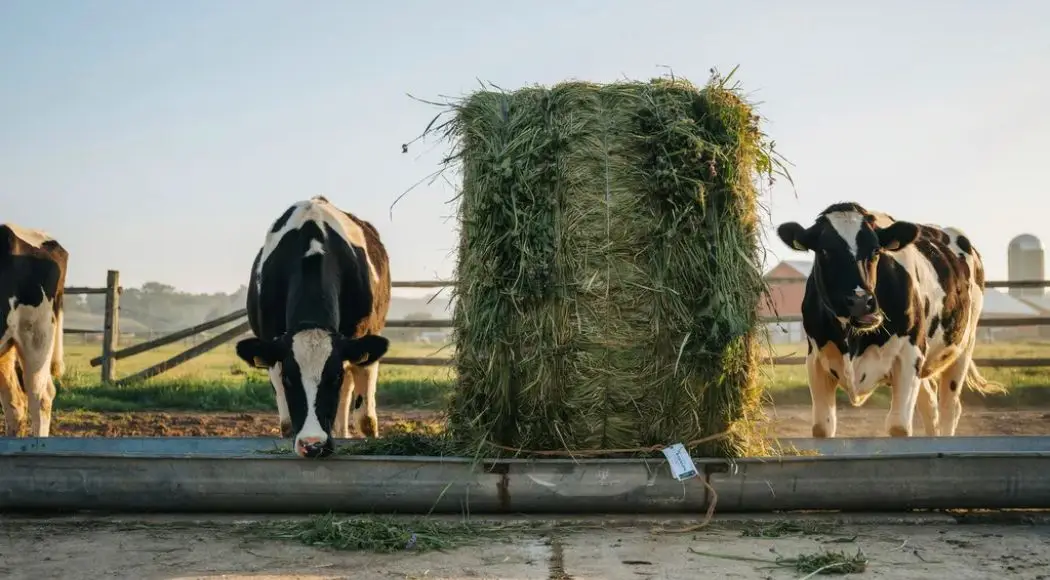
There is one forage crop that dairy nutritionists have called the Queen of Forages for over a century, and that title has never been seriously challenged. Alfalfa hay for dairy cows delivers a combination of high protein, digestible energy, ideal fiber, and essential minerals that no single competing forage can match in one package.
- What Is Alfalfa and Why Is It the Queen of Forages?
- Complete Nutritional Profile of Alfalfa Hay
- Key Benefits of Alfalfa Hay for Dairy Cows
- How Much Alfalfa Hay to Feed Dairy Cows
- Alfalfa Hay Quality: What to Look For Before Buying
- Alfalfa Hay vs Grass Silage: Which Is Better for Dairy Cows?
- Risks of Feeding Alfalfa Hay to Dairy Cows
- Conclusion
Yet despite its extraordinary nutritional profile, alfalfa is one of the most misused forages in modern dairy farming. Fed at the wrong stage of lactation, at the wrong quantity, or without a proper forage analysis, its benefits collapse and its risks multiply. The difference between alfalfa working brilliantly and working poorly in a dairy ration comes down entirely to understanding the science behind it.
This guide covers everything a dairy farmer needs to know about alfalfa hay for dairy cows in 2026. For farmers who want to understand the full picture of dairy nutrition beyond alfalfa alone, our complete dairy cattle feed guide covers every major feed type, TMR methods, and protein requirements in detail.
What Is Alfalfa and Why Is It the Queen of Forages?
Alfalfa, known scientifically as Medicago sativa, is a perennial legume forage crop cultivated across North America, Europe, and Australia. Unlike grass forages, alfalfa fixes atmospheric nitrogen through root nodules, making it both a high-nutrient crop and a soil-improving one.
Alfalfa hay for dairy cows earns its royal title through a combination of nutritional attributes that grass forages simply cannot replicate at equivalent dry matter intake levels:
- Crude protein of 18–24% dry matter in dairy-quality hay
- High digestibility: 80 to 90% protein digestibility confirmed by UC Davis research
- 25–30% nonstructural carbohydrates providing immediate rumen energy
- Natural calcium, phosphorus, potassium, and magnesium content
- Ruminally undegradable protein (bypass protein) content of 25–35%
According to the UC Davis Extension Dairy Nutritionist research, alfalfa is an excellent forage for dairy cattle because it provides nutrients needed by dairy cows in a package that is highly digestible and cost-effective.
Complete Nutritional Profile of Alfalfa Hay
Understanding the precise nutritional composition of alfalfa hay for dairy cows is essential before building any ration around it. Quality varies significantly by cutting date, leaf-to-stem ratio, and storage method.
Nutritional Comparison Table
| Nutrient | Dairy-Quality Alfalfa | Mid-Bloom Alfalfa | Grass Silage |
| Crude Protein (CP) | 20–24% DM | 16–18% DM | 10–14% DM |
| Total Digestible Nutrients (TDN) | 62–68% | 55–60% | 58–65% |
| Neutral Detergent Fibre (NDF) | 28–35% | 35–45% | 45–55% |
| Calcium | 1.2–1.8% DM | 1.0–1.4% DM | 0.4–0.6% DM |
| Bypass Protein (RUP) | 25–35% of CP | 20–28% of CP | 15–20% of CP |
| Relative Feed Value (RFV) | 150–200+ | 110–140 | Variable |
Dairy farmers should purchase locally grown hay if it is high quality, specifically an RFV greater than 150, as confirmed by University of Kentucky extension research. Below this threshold, the economic case for alfalfa over grass-based forages weakens considerably.
Key Benefits of Alfalfa Hay for Dairy Cows
1. Superior Protein for Peak Lactation
The protein found in alfalfa hay is highly digestible and contains a higher proportion of ruminally undegradable protein than grass hays, confirmed by UC Davis research. This bypass protein fraction passes through the rumen intact and is absorbed in the small intestine, directly supporting milk protein synthesis during peak lactation when protein demand is at its highest.
For a cow producing 35 liters per day, the additional bypass protein from alfalfa hay for dairy cows reduces the need for expensive purchased protein supplements like soybean meal, one of the most significant cost advantages of a well-managed alfalfa inclusion strategy.
2. High Energy Density
One tonne of alfalfa hay contains as much protein as two-thirds of a tonne of soybean meal and as much digestible energy as 25 bushels of corn, confirmed by OSU Extension research (Balliette and Torell, 1993). High-quality alfalfa is one of the most energy-dense forages available, meeting the energy demands of high-producing dairy cows more effectively than grass silage alone.
3. Rumen Health and Buffering
Alfalfa hay NDF has a high buffering capacity that helps prevent rumen pH from declining reducing the risk of subclinical rumen acidosis in high-concentrate rations. UC Davis research confirms that ruminative chewing stimulated by alfalfa NDF increases saliva flow to the rumen, which is the rumen’s primary natural acid-buffering mechanism.
4. Calcium Supply for Fresh Cows
Alfalfa hay is relatively high in calcium (1.2 to 1.8% of dry matter), which supports lactating cow requirements of approximately 0.6–0.7% dietary calcium. This is particularly valuable in the fresh cow period when milk fever risk is highest and dietary calcium management is critical.
How Much Alfalfa Hay to Feed Dairy Cows
Quantity is where most feeding errors occur with alfalfa hay for dairy cows. More is not always better the high potassium content of alfalfa interferes with the DCAD (Dietary Cation-Anion Difference) management critical in the dry cow period.
Recommended Feeding Levels by Lactation Stage
| Lactation Stage | Recommended Alfalfa Inclusion | Notes |
| Early lactation (0–60 days) | 4–6 kg DM per day | Highest protein and energy demand |
| Peak lactation (60–120 days) | 3–5 kg DM per day | Balance with maize silage |
| Mid lactation | 2–4 kg DM per day | Reduce as production declines |
| Late lactation | 1–3 kg DM per day | Lower inclusion; maintain condition |
| Close-up dry cows | Avoid or limit severely | High potassium disrupts DCAD management |
| Far-off dry cows | Up to 2 kg DM per day | Only if low-potassium variety available |
The dry cow recommendation is critical. University of Arkansas Extension research confirms that high-potassium alfalfa fed to close-up dry cows increases metabolic disease risk at calving, particularly milk fever and displaced abomasum. Grass hay or low-potassium forages are strongly preferred in this period.
Alfalfa Hay Quality: What to Look For Before Buying
Not all alfalfa hay for dairy cows is equal. Feed testing before purchase is not optional; it is essential. The compositions of bales that look similar may vary greatly, as confirmed by University of Arkansas Cooperative Extension research.
Quality Assessment Checklist
| Factor | Dairy Quality Target | Red Flag |
| RFV (Relative Feed Value) | 150+ | Below 120 |
| Crude Protein | 18%+ DM | Below 15% |
| NDF | Below 40% DM | Above 45% |
| ADF | Below 35% DM | Above 40% |
| Colour | Bright green | Yellow or brown |
| Smell | Fresh, sweet | Musty or mouldy |
| Leaf:Stem ratio | High leaf content | Stemmy, coarse |
| Moisture (baled hay) | Below 15% | Above 18% |
The cutting stage is the single biggest quality determinant. Alfalfa cut at the early bud to early bloom stage consistently delivers higher protein and energy than mid-bloom or late-bloom cuts. Most of the alfalfa protein is in the leaves. Stemmy alfalfa tends to be significantly lower in whole-plant crude protein, as confirmed by Progressive Forage research.
Alfalfa Hay vs Grass Silage: Which Is Better for Dairy Cows?
This is the question most dairy farmers face when building their forage budget. The answer is not either/or; it is both, used strategically.
| Factor | Alfalfa Hay | Grass Silage |
| Protein | Higher (18–24% CP) | Lower (10–14% CP) |
| Energy | High | Moderate to high |
| Cost per tonne | Higher | Lower |
| Storage | Dry barn required | Clamp or bale wrap |
| Palatability | High | High |
| Bypass protein | Higher | Lower |
| Calcium | High caution dry cows | Low safer for dry cows |
| Best use | Lactating cow rations | Year-round base forage |
Farm and Dairy confirmed in December 2025 that dairy farms now feed more corn silage than alfalfa, but the most productive herds continue to use alfalfa as a strategic protein and energy supplement alongside corn silage, rather than a complete forage replacement.
Risks of Feeding Alfalfa Hay to Dairy Cows
Alfalfa hay for dairy cows carries specific risks that must be managed proactively:
Bloat Risk
Legume forages, including alfalfa, carry a bloat risk, particularly when fed as fresh grazed alfalfa. Hay form significantly reduces this risk compared to fresh alfalfa pasture. University of Nevada Extension recommends never allowing leaves to build up in the feed bunk, which can concentrate the bloat-promoting fractions of the plant.
Potassium Interference
Alfalfa is naturally high in potassium typically 2.0–3.5% of DM. In dry cow rations, excess dietary potassium raises DCAD, which blocks the cow’s ability to mobilise calcium reserves at calving and directly increases milk fever incidence.
Mycotoxin Risk in Poor Storage
Improperly baled or stored alfalfa hay with moisture above 18% is highly susceptible to mould and mycotoxin development. Always test moisture content before purchase and reject any hay with visible mold or musty odor.
Conclusion
Alfalfa hay for dairy cows earns its Queen of Forages title every time it is fed correctly at the right quality, in the right quantity, to the right cows at the right stage of lactation. The research from the University of Kentucky, UC Davis, OSU Extension, and University of Arkansas consistently confirms its superiority as a protein and energy source for lactating dairy cows when compared to grass-based forages on a nutrient-per-kilogram basis.
Key takeaways:
- Dairy-quality alfalfa delivers 18–24% crude protein and RFV above 150
- One tonne equals the protein of two-thirds of a tonne of soybean meal, a significant cost saving
- Feed 3–6 kg DM per day to lactating cows depending on production level
- Avoid or strictly limit feeding to close-up dry cows due to high potassium and DCAD disruption
- Always test hay before purchase; visual assessment alone is unreliable
- Combine with maize silage or grass silage for the most cost-effective balanced ration
- Store below 15% moisture; reject any mouldy or musty bales immediately
Work with a qualified ruminant nutritionist to integrate alfalfa hay for dairy cows into a properly balanced ration based on current forage analysis. The quality of individual batches varies enough to make assumption-based feeding a genuine production risk.