Neck Ties: Everything You Need To Know In 2026
Neck ties are one of the most powerful accessories in men’s fashion; a single well-chosen tie can transform an ordinary outfit into a statement of confidence, professionalism, and personal style. Yet despite being worn by millions of men every day, most people know very little about the rich history, the remarkable variety of styles, and the subtle art of wearing them correctly.
- The History Of Neck Ties From Croatia To The Boardroom
- Tie Types: A Complete Guide To Every Style
- Neckwear accessories Style Comparison Table
- How these fashion pieces Are Made: The Craft Behind The Accessory
- How To Tie tie accessories The Most Important Knots
- Neck Ties Colors And What They Communicate
- Best Outfits To Wear With neckwear pieces
- Where To Buy these items Complete Buyer's Guide
- The Importance Of formal accessories In Daily Life And Professional Settings
- Conclusion
- Frequently Asked Questions (FAQ)
In this complete guide, you will find everything: the full history of these accessories, every type available, how to wear and knot them correctly, the best color combinations, how they are made, where to buy them, and why they remain a powerful style tool in 2026 and beyond.
The History Of Neck Ties From Croatia To The Boardroom
The story of neck ties begins in 17th-century Croatia. During the Thirty Years’ War, Croatian soldiers wore knotted cloth around their necks as part of their military uniform—a practical item that French soldiers noticed and adopted. The French, with their characteristic passion for fashion, refined the concept and introduced it to European high society.
King Louis XIV of France was so taken with the Croatian style that he began wearing decorative neck cloths as a fashion statement. By the late 1600s, the cravat, the direct ancestor of the modern tie, had become an essential element of European aristocratic dress.
Key milestones in tie history:
- 1660s Cravats introduced to France from Croatia
- 1700s Elaborate cravat styles become a mark of wealth and status
- 1850s The four-in-hand knot developed as a more practical alternative
- 1924 Jesse Langsdorf patents the modern cut tie construction method
- 1950s–1970s Wide ties dominate men’s fashion
- 1980s–1990s Power dressing drives demand for bold, statement ties
- 2000s–Present Slim ties emerge alongside a more casual professional culture
The modern tie as we know it, cut on the bias, with three sections and a slip-stitch construction, was standardized by Jesse Langsdorf in New York in 1924. His patented design allows the tie to return to its original shape after knotting, which remains the standard construction method used today.
Tie Types: A Complete Guide To Every Style
The Classic Necktie
The classic necktie is the standard business and formal tie, a long, tapered piece of fabric worn around the collar and knotted at the front. Available in widths ranging from 2.5 inches (slim) to 3.5 inches (standard) and 4+ inches (wide), the classic tie is the most versatile and widely worn style globally.
The Bow Tie
The bow tie is a self-tied or pre-tied knot worn at the collar, most strongly associated with formal occasions, black-tie events, and academic or creative professions. Self-tied bow ties are considered more prestigious than pre-tied versions.
The Skinny Tie
Popularized in the 1960s and revived in the 2000s, the skinny tie measures 1.5 to 2.5 inches at its widest point. It pairs best with slim-cut suits and shirts with narrower collar spreads. Popular in creative industries and among younger professionals.
The Knit Tie
Knit ties are made from woven or knitted fabric, typically wool, silk, or cotton, and feature a distinctive squared-off tip rather than the pointed tip of traditional ties. They offer a more casual, textured aesthetic that works well with tweed jackets and casual blazers.
The Bolo Tie
The bolo tie, sometimes called a string tie, consists of a braided leather cord with an ornamental clasp. It is the official neckwear of several U.S. states and has a strong association with Western American style. It has experienced a significant fashion revival in recent years among style-conscious men.
The Cravat
The cravat, the historical ancestor of the modern tie, has returned as a fashion item in its own right. Worn tucked into the shirt collar rather than knotted in the traditional sense, the cravat communicates a relaxed elegance that works well for formal social occasions and creative environments.
The Clip-On Tie
The clip-on tie attaches directly to the shirt collar with a metal clip rather than being tied. Used primarily in professions requiring a tied appearance without the safety risk of a hanging knot, such as law enforcement, security, and some food service roles.
Neckwear accessories Style Comparison Table
| Type | Formality | Best Occasion | Width | Material |
| Classic Necktie | Business to Formal | Office, Weddings, Events | 3–3.5 inches | Silk, Polyester, Wool |
| Bow Tie | Formal to Semi-Formal | Black Tie, Graduations | N/A | Silk, Velvet, Cotton |
| Skinny Tie | Casual to Business | Creative Industries, Parties | 1.5–2.5 inches | Silk, Polyester |
| Knit Tie | Smart Casual | Casual Friday, Social Events | 2–2.5 inches | Wool, Silk, Cotton |
| Bolo Tie | Casual to Semi-Formal | Western Events, Creative Wear | N/A | Leather, Silver |
| Cravat | Smart Casual to Formal | Garden Parties, Social Events | N/A | Silk, Linen |
| Clip-On Tie | Professional Casual | Uniforms, Safety Environments | Varies | Polyester |
How these fashion pieces Are Made: The Craft Behind The Accessory
Understanding how ties are constructed explains why quality varies so dramatically between price points and why a well-made tie looks and moves so differently from a cheap one.
Materials
- Silk is the gold standard for tie fabric. Natural silk has a subtle sheen, drapes beautifully, and holds a knot cleanly. Genuine silk ties are identified by their soft handle and natural luster.
- Polyester is the most common material for mid-range and budget ties. Modern polyester weaving has improved significantly; some polyester ties are difficult to distinguish from silk at a glance.
- Wool is warm, textured, and ideal for autumn and winter styling. Wool ties are most commonly found in knit tie formats.
- Cotton is casual and breathable; cotton ties work well in summer and business casual environments.
- Linen light and textured, linen ties are a summer alternative with a relaxed, natural aesthetic.
Construction
A quality tie is cut on the bias at a 45-degree angle to the fabric grain. This allows the tie to hang straight, resist twisting, and return to its original shape after knotting. The tie body consists of three panels: the wide end, the narrow end (blade), and the neck. These are hand-stitched together using a slip stitch that allows the fabric to move and breathe without creating a rigid seam.
The interlining, the hidden inner layer, determines how the tie drapes and holds its knot. High-quality ties use a wool or wool-blend interlining. Budget ties often use a thinner synthetic interlining that causes the knot to look hollow or collapse over the course of the day.
How To Tie tie accessories The Most Important Knots
The Four-In-Hand Knot
The most common and versatile knot appropriate for most collar types and all formality levels. It produces a slightly asymmetrical, elongated knot that works with both slim and standard collar spreads.
Steps:
- Drape the tie around the collar with the wide end on the right, approximately 12 inches lower than the narrow end
- Cross the wide end over the narrow end
- Wrap the wide end underneath and back to the right
- Bring the wide end across the front again to the left
- Pull the wide end up through the neck loop
- Slide the wide end down through the front knot
- Tighten by pulling down on the wide end while holding the knot
The Windsor Knot
The Windsor produces a large, symmetrical, triangular knot ideal for spread-collar shirts and formal occasions. It is the preferred knot for job interviews, weddings, and formal presentations.
The Half Windsor Knot
A medium-sized symmetrical knot is easier to tie than the full Windsor but more formal than the four-in-hand. The most widely recommended knot for everyday professional wear.
The Pratt (Shelby) Knot
A medium, symmetrical knot that uses less tie length than the Windsor, particularly useful for taller men or those with longer ties.
Neck Ties Colors And What They Communicate
Color is the most powerful variable in necktie selection, and understanding the psychology of tie color is a genuine professional advantage.
| Color | Message Communicated | Best Occasion |
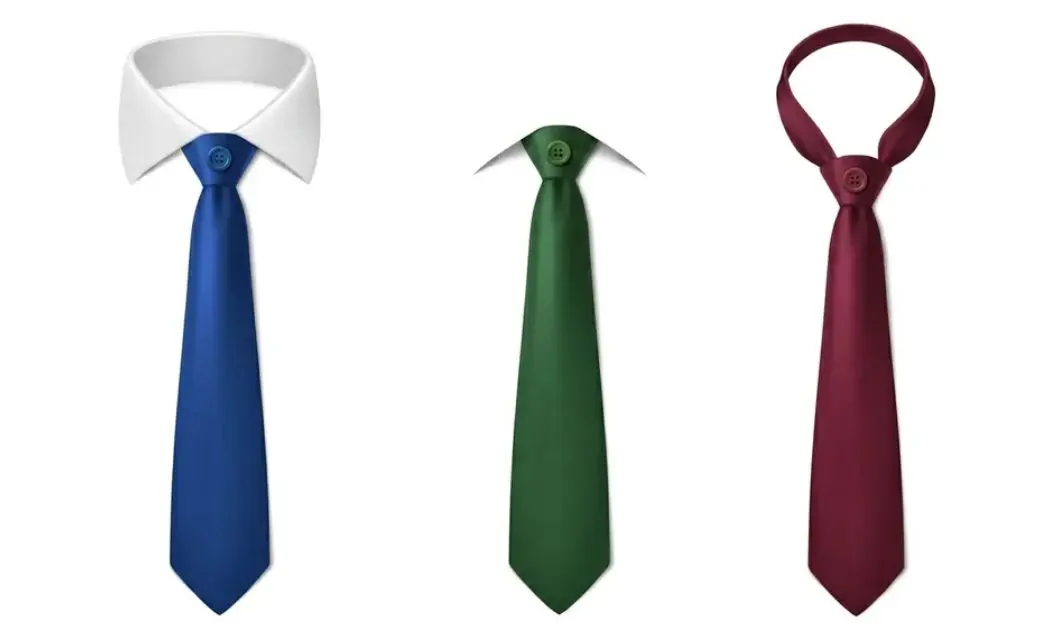
| Navy Blue | Authority, trustworthiness, confidence | Interviews, boardroom, client meetings |
| Red | Power, energy, assertiveness | Negotiations, presentations, leadership roles |
| Burgundy | Sophistication, maturity, refinement | Formal dinners, senior professional settings |
| Grey | Neutrality, balance, professionalism | General business wear, versatile pairing |
| Green | Growth, creativity, approachability | Creative industries, relaxed business settings |
| Yellow/Gold | Optimism, warmth, confidence | Social events, networking, casual business |
| Black | Formality, elegance, authority | Funerals, black tie events, formal dinners |
| Light Blue | Calm, reliability, openness | Everyday business, client-facing roles |
| Pink | Approachability, confidence, modernity | Business casual, social events |
| Purple | Creativity, luxury, individuality | Creative roles, social occasions |
Best Outfits To Wear With neckwear pieces
Classic Business Look
Navy or charcoal suit + white Oxford shirt + navy or burgundy silk tie + black Oxford shoes. This combination is universally appropriate for office environments, client meetings, and formal presentations.
For a complete office wardrobe guide, read our detailed article on are jeans business casual. Understanding exactly when denim works in a professional setting helps you build a more versatile and confident wardrobe.
Smart Casual Look
Grey flannel trousers + light blue poplin shirt + knit tie in burgundy or forest green + brown leather loafers. This combination works well for business casual environments and smart social occasions.
Formal Evening Look
Black dinner suit + white dress shirt + black silk bow tie + patent leather Oxford shoes. The classic black tie combination remains the gold standard for formal evening events.
Creative Professional Look
Slim-fit chinos + checked shirt + skinny tie in a contrasting pattern + Chelsea boots. This combination works well in creative industries, media, and fashion-forward professional environments.
Where To Buy these items Complete Buyer’s Guide
Premium Options (£50–£300+)
- Hermès, the world’s most prestigious tie brand, iconic silk prints
- Charvet, a Parisian tie maker favored by world leaders
- Drake’s London British hand-crafted silk and wool ties
- Ralph Lauren: accessible luxury with consistent quality
Mid-Range Options ($30–$100)
- Brooks Brothers: American classic, consistent quality and traditional styles
- Hugo Boss: contemporary European styling with reliable construction
- Ted Baker pattern-forward designs with good fabric quality
- Reiss’s strong value for quality silk and polyester blends
Budget Options (Under $30)
- ASOS: wide variety of styles at accessible prices
- Amazon Essentials reliable basic ties for everyday professional wear
- Marks and Spencer: consistent quality at affordable price points
- H&M trend-led styles at entry-level prices
Online Marketplaces
- Etsy handmade and vintage ties from independent makers
- eBay authentic vintage and pre-owned designer ties
- The Tie Bar: U.S.-based specialist with excellent value and quality
The Importance Of formal accessories In Daily Life And Professional Settings
Despite the rise of casual workplace dress codes, ties remain a powerful professional and social tool in 2026.
Why ties still matter:
- First impressions research consistently shows that well-dressed individuals are perceived as more competent, trustworthy, and authoritative at first meetings.
- Dress code compliance: Many formal professions, including law, finance, and politics, maintain tie requirements
- Personal branding: a well-chosen tie communicates personality, taste, and attention to detail
- Cultural significance: In many cultures and countries, ties remain an essential marker of professional respect
- Occasion dressing: weddings, funerals, graduations, and formal dinners all call for appropriate tie selection
Conclusion
Neck Ties accessories are far more than a piece of fabric around your collar. They are a centuries-old tradition, a marker of professional identity, and a genuine tool of personal style that rewards those who understand them.
Key Takeaways:
- these pieces originated in 17th-century Croatia and were standardized in their modern form in 1924
- Seven main types exist: classic, bow, skinny, knit, bolo, cravat, and clip-on, each suited to different occasions
- Silk offers the best quality; construction matters as much as fabric
- The four-in-hand is the most versatile knot; the Windsor is best for formal occasions
- Color communicates powerfully: navy for authority, red for energy, burgundy for sophistication
- Quality ties are available at every price point from under $10 to over $300
For more style guides, fashion tips, and lifestyle content, visit OfferedMagazine.
Frequently Asked Questions (FAQ)
What Are neckwear options Made From?
These garments are made from silk, polyester, wool, cotton, or linen. Silk is considered the premium material offering the best drape, sheen, and knot quality. Polyester is the most common affordable alternative.
How do you choose the right tie width?
Match tie width to lapel width. Standard lapels suit 3- to 3.5-inch ties. Slim lapels suit 2 to 2.5-inch ties. When in doubt, a 3-inch tie works with most suit styles and body types.
What Is The Difference Between A Windsor And A Four-In-Hand Knot?
The Windsor produces a large, symmetrical triangular knot ideal for formal occasions and spread collars. The four-in-hand produces a smaller, asymmetrical knot suitable for everyday business wear and point collars.
How Do You Store Ties To Prevent Damage?
Untie the knot completely after each wear and hang ties on a dedicated tie rack or roll them loosely for drawer storage. Never leave a tie in a knotted position overnight, as this permanently stretches the interlining.
Are ties still relevant in 2026?
Yes. While casual dress codes have reduced daily tie wearing in many industries, ties remain essential in law, finance, politics, and formal social occasions. They are also experiencing a fashion revival among style-conscious younger professionals seeking to differentiate their personal brand.