Budget Motorcycle Kit vs Premium Gear: Which One Is Worth Your Money
You just got your motorcycle. Or maybe you have been riding for years and your current setup is starting to show its age. Either way, the question hits you sooner or later: do I spend less now and upgrade later, or do I invest in a proper kit from the start?
- What Is a Motorcycle Kit and What Does It Include?
- Budget Motorcycle Kits: What You Actually Get
- Premium Motorcycle Kits: What Justifies the Price
- The Real Cost Comparison Over Time
- Who Should Buy a Budget Motorcycle Kit
- Who Should Buy a Premium Motorcycle Kit
- Airline Springs in Motorcycle Kits: A Closer Look
- How to Evaluate Any Motorcycle Kit Before You Buy
- FAQs About Motorcycle Kits
- Conclusion: The Answer Is Clearer Than You Think
The motorcycle kit market is genuinely overwhelming. Walk into any gear or parts store, scroll through Amazon or RevZilla, and you will find everything from a $150 starter bundle to $2,000 full setups that look like they were engineered for professional circuit riders. Both exist for a reason. The question is which one is right for you.
This guide breaks down the real differences between budget and premium motorcycle kits, covers what each category actually includes, and gives you a clear framework for making the right call without wasting money or compromising your safety.
What Is a Motorcycle Kit and What Does It Include?
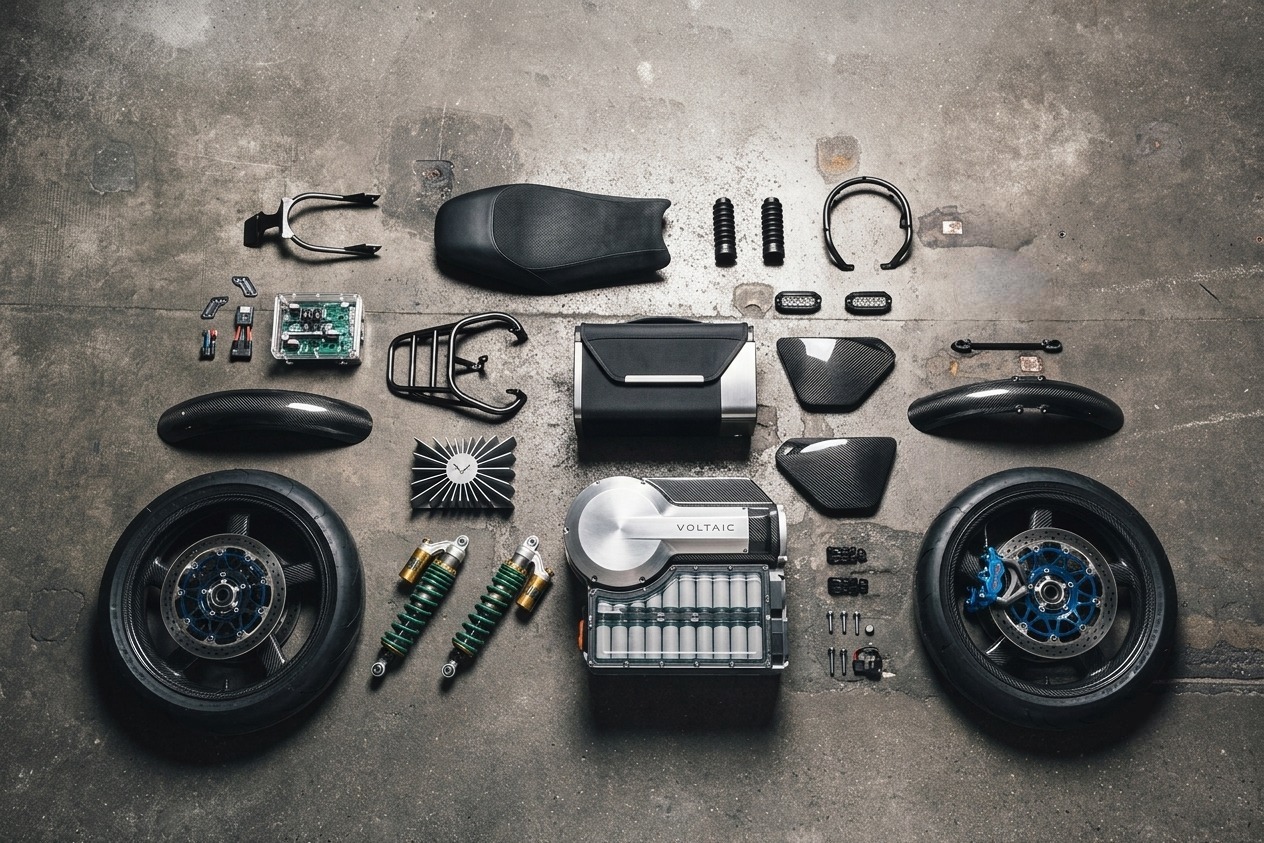
Before comparing price points, it is worth defining what a motorcycle kit actually means, because the term covers several distinct categories.
Riding Gear Kits are the most common type for everyday riders. These include a helmet, jacket, gloves, and boots sold together or assembled individually. Some kits also include body armor inserts and riding pants.
Maintenance and Repair Kits are tool-based packages containing the essentials for routine upkeep: chain lube, oil, filters, tire repair tools, and basic hand tools suited to a specific bike.
Suspension and Performance Kits are more technical. These include components like fork springs, shock absorbers, and in more advanced builds, air suspension systems complete with compressors, airline springs, and pressure gauges. Riders who want adjustable ride height or improved handling often explore these options.
Modification Kits cover aesthetic and performance upgrades: LED lighting, custom exhausts, handlebar swaps, and similar components.
For the purposes of this comparison, the focus is on riding gear kits and suspension kits, as these represent the two areas where the budget vs premium debate carries the most consequence for both safety and performance.
Budget Motorcycle Kits: What You Actually Get
Budget kits typically fall in the $100 to $400 range for riding gear. For suspension components, budget options tend to range from $80 to $300 depending on the type and compatibility.
Here is what riders typically find at this price point:
Riding Gear
Entry-level helmets usually carry DOT certification, which meets the minimum safety standard required for road use in the United States. Materials tend to be heavier, ventilation is basic, and the fit system is often limited to a single comfort liner. Jackets at budget price points are frequently made from lower-grade textile rather than leather, with basic CE Level 1 armor at the elbows and shoulders. Gloves tend to lack knuckle protection beyond a thin foam pad.
These products are not useless. For short urban commutes on low-speed roads, a budget kit provides meaningful protection compared to no kit at all. The issue is longevity and performance under serious impact conditions.
Suspension Components
Budget suspension upgrades are typically factory-spec replacements or mild performance steps up from stock. They work. They provide a noticeable improvement over worn-out original components. However, they rarely offer adjustability, and their damping performance can degrade faster under repeated stress.
Premium Motorcycle Kits: What Justifies the Price
Premium motorcycle kits start around $500 for riding gear and can exceed $2,000 for full suspension system builds. The difference is not just branding.
Riding Gear
Premium helmets use advanced shell materials such as fiberglass composites or carbon fiber, significantly reducing weight while improving impact energy absorption. They often carry dual certifications (DOT and ECE 22.06, the European standard), multi-density EPS liners, and emergency cheek pad removal systems for trauma care. Jackets use full-grain leather or high-denier Cordura fabrics, with CE Level 2 armor at the elbows, shoulders, and optional back protectors. The fit is tailored, breathability is engineered, and the gear holds up meaningfully better in abrasion testing.
Suspension Components
This is where premium truly separates itself. High-end suspension kits, particularly those incorporating airline springs as part of an air-assisted suspension setup, give riders on-demand ride height adjustment, improved load management for touring or two-up riding, and dramatically better bump absorption over long distances.
Premium air suspension kits designed for motorcycles are fully adjustable based on height and weight, allowing riders to sit flat-footed when stopped while enjoying a more comfortable ride on long-distance runs, when riding two-up, or with luggage.
The airline springs in these systems, the pressurized air delivery lines that feed compressed air into the suspension bellows, are a critical component. Dense, durable rubber supply lines carry pressurized air into the air springs and are engineered to resist punctures or damage from road debris and other hazards. In budget kits, this level of component engineering is simply not present.
Advanced air suspension systems use exclusive aramid fiber air spring technology that provides spring rate adjustability, maximizes wheel travel, and adjusts to any desired ride height.
The Real Cost Comparison Over Time
This is where many riders miscalculate. The upfront number on a budget kit looks attractive. The lifetime number tells a different story.
A $200 budget helmet typically needs replacement every two to three years due to degraded EPS foam and liner compression. A $600 premium helmet, maintained properly, can last five to seven years before degradation reaches the replacement threshold.
A $150 budget jacket with basic armor will likely need armor upgrades within the first year if the rider takes safety seriously. Quality CE Level 2 back protectors alone cost $60 to $100 separately.
Budget suspension kits, if they include airline springs for air-assisted setups, often use lower-grade tubing that is more susceptible to cracking under temperature extremes. A single failed airline spring can compromise the entire air suspension system, leaving a rider with no ride height control mid-trip.
When you run the numbers over a three year period, the total cost of ownership between budget and premium narrows considerably. In some cases, premium costs less over time.
Who Should Buy a Budget Motorcycle Kit
Budget kits are the right choice in specific situations:
A new rider who is not yet committed to long-term riding does not need a $1,200 jacket. A rider on a learner bike in an urban environment, covering short daily distances at moderate speeds, gets genuine value from a $250 budget gear kit.
For suspension kits specifically, a rider on a stock commuter bike who simply needs to replace worn-out factory shocks does not need an air-assisted system with airline springs and a compressor. A solid coil spring replacement at budget price delivers real improvement.
The rule of thumb: if you are testing commitment or managing genuine financial constraints, budget works. Just understand what you are trading.
Who Should Buy a Premium Motorcycle Kit
Premium is the right investment for:
Riders who cover 5,000 or more miles per year. At that volume, gear quality directly impacts fatigue, comfort, and long-term safety outcomes.
Touring riders who carry luggage or ride two-up. The load management capabilities of a premium suspension kit with airline springs and adjustable air pressure become functionally necessary, not just a luxury.
Riders in accident-prone environments such as highway commuting, canyon roads, or off-road trail riding where impact forces are greater and gear performance margins matter.
Anyone who has experienced a low-speed slide will tell you the same thing: you will wish you spent more on your jacket.
Airline Springs in Motorcycle Kits: A Closer Look
Because airline springs appear across both budget and premium suspension kits, it is worth understanding exactly what they do and why quality matters at this specific component level.
Springs are the backbone of a motorcycle suspension system, providing the ability to absorb shocks and maintain consistent wheel contact with the road. In an air suspension setup, airline springs replace or supplement traditional coil springs by using pressurized air delivered through flexible tubing to create an adjustable spring rate.
The most common motorcycle suspension setup includes a coil spring paired with a hydraulic damper, where springs allow for wheel movement independent of the chassis, while dampers control the springs’ motion. When airline springs are added to this system, the rider gains the ability to change spring rate and ride height without physically swapping components.
The quality of the airline itself, the tubing that carries air to the spring bellows, determines how reliably this adjustability works over time. Budget airline springs use basic rubber compounds. Premium versions use reinforced textile or aramid fiber constructions that resist cracking, kinking, and pressure loss under the thermal cycling that comes with regular riding.
If you are building or buying a suspension kit that includes airline springs, this is not the component to economize on. A failed airline in a full air suspension setup is not a minor inconvenience. It is a safety event.
How to Evaluate Any Motorcycle Kit Before You Buy
Regardless of budget or premium positioning, use this checklist before committing to any motorcycle kit purchase:
For riding gear: Confirm certification standards on all protective items. DOT is the minimum for helmets in the US. CE Level 1 is the minimum for armor. Look for CE Level 2 if you want meaningful impact protection.
For suspension kits: Identify every component included and verify compatibility with your specific make and model. Not all kits fit all bikes. Check whether airline springs and air system components come with pressure ratings specified.
For any kit: Read owner reviews specifically from people who have used the kit for more than six months. Short-term reviews rarely surface durability issues. Long-term feedback reveals what the product description will not tell you.
Check return and warranty policies. Premium brands typically back their products with two to five year warranties. Budget brands often provide thirty to ninety days. This asymmetry tells you what each manufacturer actually believes about their own product.
FAQs About Motorcycle Kits
What is typically included in a motorcycle kit?
A motorcycle kit varies by type. Riding gear kits generally include a helmet, jacket, gloves, and boots. Suspension kits include springs, dampers, and in air-assisted setups, components such as airline springs, compressors, and mounting hardware. Maintenance kits include oils, filters, and tools. The word “kit” simply refers to a bundled set of components for a specific purpose.
Are budget motorcycle kits safe?
Budget motorcycle kits that carry proper safety certifications (DOT for helmets, CE for armor) meet the legal minimum safety requirements. However, they typically offer lower levels of impact protection, less abrasion resistance, and degrade faster than premium alternatives. For low-speed urban riding, a certified budget kit is meaningfully safer than no protection. For highway or performance riding, premium gear provides a substantially better safety margin.
What are airline springs in a motorcycle suspension kit?
Airline springs refer to the pressurized air delivery lines in an air-assisted motorcycle suspension system. They carry compressed air from a compressor or storage tank into inflatable air spring bellows, which replace or supplement traditional coil springs. The pressure inside the airline springs determines the ride height and spring rate of the suspension. Higher-quality airline springs use reinforced materials to resist cracking, heat damage, and pressure loss over time.
How much should I spend on a motorcycle kit?
This depends on your riding frequency, style, and the type of kit. For riding gear, a realistic entry-level budget for a reasonably safe kit is $300 to $500. For a quality premium setup, expect $800 to $1,500. For suspension kits including air components and airline springs, budget options start around $150 to $300 while full premium air suspension systems from established brands range from $600 to $2,000 or more depending on the bike and system complexity.
Is it worth upgrading motorcycle suspension with airline springs?
For casual short-distance riders, probably not. For touring riders, two-up riders, or anyone who carries significant luggage, an air suspension upgrade with quality airline springs provides measurable improvements in ride comfort, load management, and handling stability. The adjustability alone, being able to dial in ride height based on load, is a genuine functional advantage that traditional coil spring setups cannot match.
How do I know if my motorcycle kit components are compatible with my bike?
For gear, compatibility is about fit rather than mechanical matching. For suspension components, especially airline spring systems, compatibility depends on the make, model, and year of your motorcycle. Always cross-reference part numbers with manufacturer fitment guides before purchasing. Many suspension kit suppliers provide compatibility lookup tools on their websites.
Can I mix budget and premium components in a motorcycle kit?
Yes, and this is actually a smart approach for budget-conscious riders. Prioritizing premium where it matters most (helmet and jacket, which bear the brunt of most impact scenarios) while using mid-range options for gloves and boots is a reasonable strategy. In suspension kits, prioritizing premium airline springs and air spring bellows while using budget mounting hardware is similarly logical, since the pressure-bearing components carry the most consequence if they fail.
How often should airline springs in a suspension kit be inspected?
This varies by manufacturer and riding conditions, but a general best practice is to visually inspect airline springs and associated tubing every 3,000 to 5,000 miles or at every oil change interval. Look for visible cracking, kinking, abrasion damage, or signs of air leakage. Any visible deterioration warrants replacement before the next significant ride. I would recommend verifying specific inspection intervals with the manufacturer of your particular suspension system, as recommendations vary.
Conclusion: The Answer Is Clearer Than You Think
Budget or premium is not really the question. The real question is: what does this kit need to do for you, how often, and under what conditions?
If you ride casually, cover short distances, and are still figuring out whether motorcycling is a long-term pursuit, a certified budget kit is a sensible starting point. Spend responsibly, ride safely, and upgrade when you know more about your needs.
If you ride regularly, cover serious distances, carry passengers or gear, or simply value the margin that quality provides in the moments when things go wrong, the premium investment justifies itself. This is especially true for suspension systems with airline springs, where component quality directly determines adjustability, reliability, and longevity.
The riders who regret their gear choices are almost never the ones who spent too much. Invest in a motorcycle kit that matches the seriousness with which you ride. Your gear and your suspension are not accessories. They are the difference between a close call and a life-altering outcome.