
Is Kia a Good Car Compared to Toyota, Honda, and Hyundai?
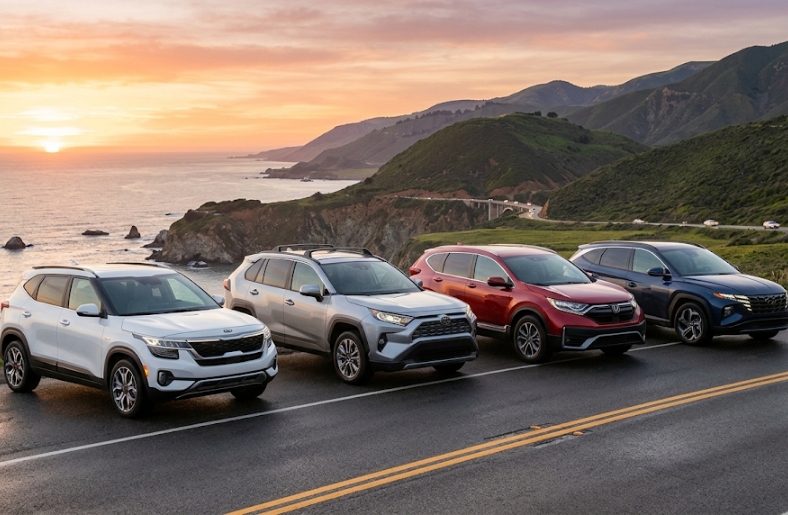
When shopping for a new car, one of the first questions that comes up is: is Kia a good car? A decade ago, many buyers would have hesitated at the Kia badge. Today, the story is entirely different. Kia has transformed itself into one of the most competitive automakers in the world, regularly winning awards for design, technology, and value.
But how does Kia actually stack up against the industry heavyweights? In this comparison, we put Kia head to head against Toyota, Honda, and Hyundai across the areas that matter most to real buyers: reliability, value for money, safety ratings, technology, and long term ownership costs. By the end, you will have a clear picture of whether Kia deserves a spot on your shortlist.
A Brief Look at Kia Today
Kia is a South Korean automaker founded in 1944. For many years it was seen as a budget brand, known for affordable but uninspiring vehicles. That reputation has been aggressively dismantled over the past decade. The brand now produces the Kia EV6, which won the 2022 World Car of the Year title, and a full lineup ranging from subcompact SUVs to electric vehicles.
Kia and Hyundai share a parent company, Hyundai Motor Group, which gives both brands access to the same engineering platforms and technology. This is an important detail we will return to throughout this comparison.
Kia vs Toyota: The Reliability Showdown
Toyota is the gold standard when it comes to reliability. Brands like the Camry and Corolla have built reputations over decades that are difficult to challenge. J.D. Power and Consumer Reports consistently place Toyota near the top of their dependability rankings.
However, Kia has closed the gap significantly. In the 2023 J.D. Power Initial Quality Study, Kia ranked third overall among all mainstream brands, ahead of several traditionally trusted names. The Kia Telluride has been named the best three row SUV by multiple publications for several consecutive years, a title that speaks to quality well beyond what a “budget” label implies.
Where Toyota Still Leads
- Long term reliability data over 10 plus years of ownership
- Stronger resale value across nearly all segments
- Hybrid technology with a longer track record
Where Kia Has the Edge
- Lower starting price on comparable models
- More standard tech features at base trim levels
- 10 year / 100,000 mile powertrain warranty versus Toyota’s 5 year / 60,000 mile coverage
Verdict: Toyota wins on long term reliability legacy, but Kia offers more value and a stronger warranty that covers you for a longer period.
Kia vs Honda: Technology and Interior Quality
Honda has long been praised for building engaging, driver focused vehicles with solid interiors. The Civic and CR V remain perennial bestsellers in the United States, and for good reason. They offer a balance of practicality, driving dynamics, and reasonable pricing.
Kia challenges Honda most directly in the compact and midsize SUV space. The Kia Sportage competes directly with the Honda CR V, and depending on the trim level, the Sportage often comes loaded with more standard features at a lower price point. The interior of recent Kia models, particularly the Sportage and K5 sedan, has drawn praise from automotive journalists for its premium feel that punches above its price class.
Where Honda Still Leads
- Driving dynamics and engine refinement on sedan models
- Honda Sensing safety suite standard across most models
- Slightly better resale value retention
Where Kia Has the Edge
- Larger touchscreens and more intuitive infotainment systems
- More aggressive styling that appeals to younger buyers
- Better warranty terms
- Stronger EV lineup with the EV6 and EV9
Verdict: Honda and Kia trade blows in this segment. If you prioritize driving feel and brand confidence, Honda is a safe pick. If you want more technology and interior space for the money, Kia delivers.
Kia vs Hyundai: A Tale of Twin Platforms
Comparing Kia and Hyundai is a unique exercise because these two brands share the same engineering backbone. Both are owned by Hyundai Motor Group and share platforms, engines, and transmissions. What separates them is styling philosophy, interior design, and target demographics.
Hyundai has historically aimed at a slightly older, more conservative buyer, while Kia has pushed bolder designs and sportier aesthetics. The Kia K5, for example, has a more aggressive stance compared to the Hyundai Sonata, even though they share the same underpinnings. Reliability between the two brands is effectively identical because the mechanical components are shared.
When to Choose Hyundai
- You prefer a more refined and understated design language
- You want the Hyundai Ioniq lineup of dedicated electric vehicles
- Genesis (Hyundai’s luxury brand) is on your radar for the future
When to Choose Kia
- You want sharper, more eye catching design
- The Kia Telluride is your target vehicle (it has no direct Hyundai equivalent in terms of reputation)
- You are drawn to the EV6 or EV9 in the electric vehicle space
Verdict: Between Kia and Hyundai, the mechanical quality is essentially the same. The decision comes down to styling preference and which specific model fits your needs.
Safety Ratings Across All Four Brands
All four brands perform well in safety testing conducted by the National Highway Traffic Safety Administration and the Insurance Institute for Highway Safety. Multiple Kia models have earned Top Safety Pick and Top Safety Pick Plus ratings, including the Kia Telluride, Sportage, and K5.
Kia now includes its suite of driver assistance technology, called Kia DriveWise, across a wide range of trims. This includes forward collision avoidance, lane keeping assist, blind spot monitoring, and driver attention warning. These features were once reserved for luxury vehicles and are now increasingly standard on Kia’s mainstream lineup, which puts it on par with Honda Sensing and Toyota Safety Sense.
Total Cost of Ownership: The Real Comparison
The purchase price is only part of the story. When you factor in fuel economy, insurance costs, maintenance schedules, and depreciation, the total cost of ownership picture shifts. Here is how Kia compares in broad terms:
- Purchase price: Kia typically undercuts Toyota and Honda on MSRP for comparable trims
- Warranty: Kia’s 10 year powertrain warranty is the best in the segment, offering significant peace of mind
- Resale value: Toyota holds its value best over time, followed by Honda. Kia has improved but still trails slightly
- Fuel economy: All four brands are competitive. Kia’s hybrid and plug in hybrid options are strong contenders
- Maintenance costs: Kia maintenance is generally affordable and parts availability is improving globally
So Is Kia a Good Car? The Bottom Line
Yes, Kia is a genuinely good car in 2025. The stigma of being a cheap brand has been replaced by a reputation for bold design, feature rich interiors, strong safety ratings, and competitive reliability. Kia does not beat Toyota on long term dependability legacy or Honda on driving dynamics, but it offers more value per dollar than almost any brand in these segments.
If you are a first time buyer, a family looking for an SUV, or someone who wants a well equipped car without overpaying, Kia belongs on your test drive list. For buyers who prioritize maximum long term reliability above all else and do not mind paying more for it, Toyota remains the benchmark.
For More Informatic Blogs, Visit: Offered Magazine
Frequently Asked Questions
Is Kia as reliable as Toyota?
Kia has improved dramatically in reliability rankings and now consistently scores well in J.D. Power studies. Toyota still holds an edge in long term dependability data built over decades, but the gap is much narrower than it was ten years ago. For most buyers, Kia’s reliability is more than sufficient, and the longer warranty helps offset any remaining concern.
How does Kia compare to Honda in terms of value?
Kia generally offers more standard features at a lower price point compared to Honda. For example, a base Kia Sportage often comes with a larger touchscreen and more driver assistance technology than a comparably priced Honda CR V. Honda has a slight edge in resale value and driving refinement, but Kia wins on features per dollar.
Is Kia or Hyundai better?
Kia and Hyundai are mechanically very similar since they share the same parent company and engineering platforms. The difference comes down to design philosophy and model lineup. Kia tends to offer bolder styling, while Hyundai leans toward a more refined and traditional look. Neither brand has a significant advantage in reliability or performance because the underlying components are largely the same.
What is the best Kia model to buy?
The best Kia model depends on your needs. The Kia Telluride is widely regarded as one of the best three row SUVs on the market at any price. The Kia Sportage is an excellent choice for compact SUV shoppers. The Kia K5 is a strong pick for sedan buyers who want sporty styling and strong value. For electric vehicle buyers, the Kia EV6 is a top performer in its class.
Does Kia hold its value well?
Kia has improved its resale value over the years but still trails Toyota and Honda slightly when comparing depreciation curves over five to seven years. However, Kia’s lower initial purchase price and long warranty can offset the slightly steeper depreciation, often making it the more financially sensible choice over the full ownership period.
Is Kia expensive to maintain?
Kia is not expensive to maintain. Routine service costs are comparable to or lower than Toyota and Honda. Parts availability has expanded significantly as Kia’s global market share has grown. The 10 year powertrain warranty also means that major mechanical repairs during early ownership years are covered, reducing out of pocket costs.