What Is Beatnik Fashion? History, Key Looks & How to Wear It Today
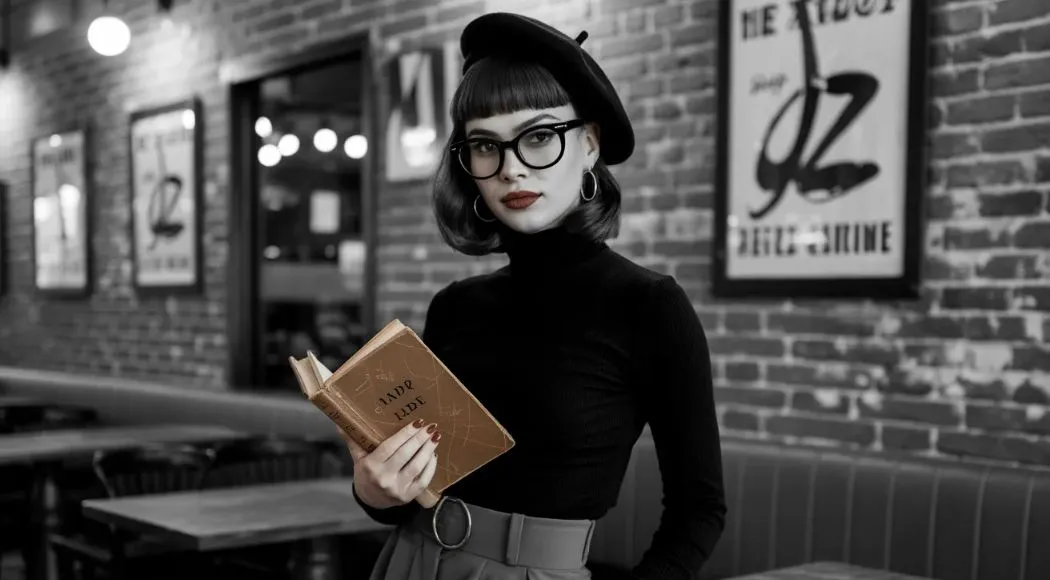
There are fashion movements that trend for a season and then there are movements that reshape culture permanently. Beatnik fashion falls firmly in the second category. Born in the coffeehouses and jazz clubs of late 1950s America, it was never really about clothes at all. It was about ideas intellectual freedom, artistic rebellion, and a deliberate rejection of the polished, conformist aesthetic that dominated postwar suburban life.
Yet somehow, the visual language of that movement the black turtleneck, the beret, the slim cigarette trousers has never stopped feeling relevant. Decades later, it still shows up on fashion runways, in street style photography, and in the wardrobes of people who want to dress with quiet conviction rather than loud trend-chasing.
This article takes you inside the full story of beatnik fashion where it came from, what it really looked like, why it resonated, and how to wear it today in a way that feels contemporary rather than costume-like.
The Cultural Roots of Beatnik Fashion
The Beat Generation and Its Visual Identity
To understand beatnik fashion, you have to understand the Beat Generation first. The movement coalesced in New York’s Greenwich Village and San Francisco’s North Beach neighborhood in the late 1940s and 1950s, centered around writers like Jack Kerouac, Allen Ginsberg, and William S. Burroughs. These were people who had looked at the American Dream the neat lawns, the matched furniture sets, the grey flannel suits and consciously turned away.
Their clothing reflected exactly that rejection. Everything about how the Beats dressed was a quiet protest against middle-class conformity:
- Black was the dominant color not because it was fashionable, but because it was anti-fashionable. It signaled that the wearer had more important things to think about than color coordination.
- Practicality over spectacle clothing was functional, durable, and understated
- European influences were embraced, particularly French existentialist aesthetics; the turtleneck was a direct import from Left Bank Parisian intellectual culture
- Anti-consumerist philosophy meant thrift stores and secondhand clothing were genuinely preferred over department stores
According to the Smithsonian Institution’s research on American subculture aesthetics, the Beat Generation’s style was one of the first modern examples of a subculture creating a fully coherent visual identity that directly expressed its philosophical values a template that punk, grunge, and dozens of other movements would later follow.
The Core Wardrobe: What Beatnik Fashion Actually Looked Like
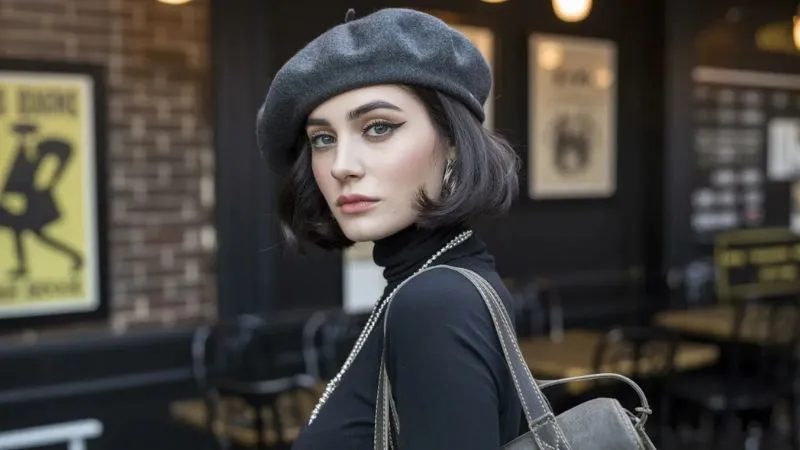
Women’s Beatnik Style
Women in the Beat scene developed a look that was simultaneously intellectual and quietly sensual a significant departure from the cinched-waist, full-skirt silhouette that defined mainstream 1950s femininity.
Key pieces for women:
- Black turtleneck sweater the single most iconic piece of the entire movement; worn fitted or slightly oversized
- Slim cigarette pants or tapered trousers usually in black, navy, or charcoal; a direct contrast to the full skirts of the era
- Leotards and bodysuits worn as tops, often paired with the cigarette trousers
- Beret or flat cap the beret in particular became a cultural shorthand for the beatnik aesthetic
- Ballet flats flat, simple, and practical; often in black
- Dark tights worn with skirts or dresses, reinforcing the monochromatic palette
- Simple shift dresses in black or dark solid colors
The overall silhouette was long, lean, and vertical deliberately different from the hourglass ideal of the period.
Beatnik Style Men: The Intellectual’s Wardrobe
When people discuss beatnik style men, they’re describing one of the most cohesive and enduring masculine aesthetics in American fashion history. It was also one of the first modern instances of men consciously using clothing to communicate intellectual identity rather than social status.
Key pieces for men:
- Black or dark turtleneck worn instead of a shirt and tie, this was the defining anti-establishment statement of the era
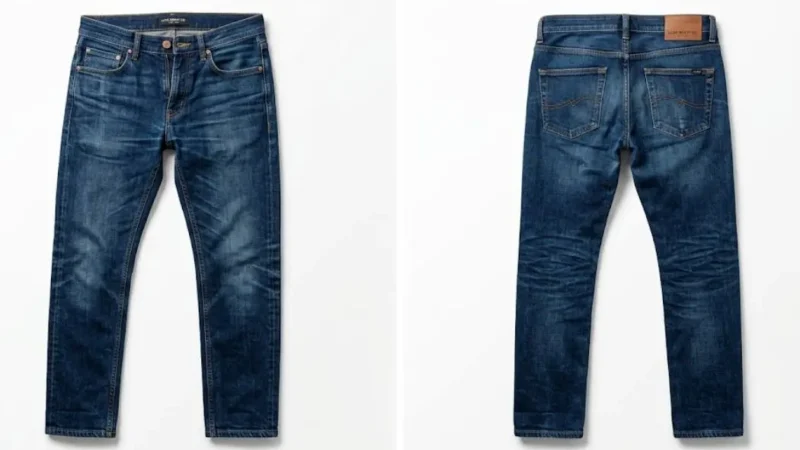
- Straight-leg or slim trousers dark wash or black; clean and unfussy
- Chinos or khakis in muted tones worn casually, not pressed into stiffness
- Simple Oxford shirts in white or chambray, worn untucked or with the collar open
- Sandals or simple leather loafers footwear was never a focal point
- Beret or flat cap shared with women as a unisex signifier of the movement
- Goatee or beard the goatee in particular became so associated with the movement that it functioned as a visual identifier of Beat affiliation
- Jazz-influenced accessories sunglasses (often round or oval), a paperback book in the back pocket, a canvas bag
The look was deliberately low-cost and anti-aspirational. Kerouac himself was photographed repeatedly in the same simple dark clothes the point was that clothing should require as little mental energy as possible, freeing the mind for more important things.
Key Colors, Fabrics, and Silhouettes
The Beatnik Color Palette
Beatnik fashion operated almost entirely in a narrow, intentional color palette:
- Black dominant and non-negotiable; the primary color of the movement
- Charcoal grey close second; versatile and understated
- Navy blue occasional relief from pure black, particularly in trousers and outerwear
- Natural and off-white used sparingly for contrast; the occasional cream shirt or natural canvas bag
- Dark olive and forest green appeared in army surplus pieces and outerwear
Bright colors, pastels, and prints were essentially absent. This was intentional color was associated with advertising, consumerism, and the cheerful superficiality the Beats were actively rejecting.
Fabrics
Natural fabrics dominated: cotton, wool, denim, and leather. Synthetics were avoided, partly for philosophical reasons (natural over manufactured) and partly because polyester and nylon were still being associated with cheap mass production. A simple wool turtleneck or a well-worn denim jacket was the ideal honest materials with honest texture.
The Jazz Connection: Music and Style Merged
You cannot discuss beatnik fashion honestly without acknowledging its deep roots in jazz culture. The Beats were obsessive jazz listeners clubs like the Five Spot in New York and The Cellar in San Francisco were as central to the movement as any bookstore or coffeehouse.
Jazz musicians of the era, particularly bebop artists like Charlie Parker, Thelonious Monk, and Miles Davis, dressed with a distinctive, understated sophistication that fed directly into beatnik aesthetics. The dark clothing, the berets, the cool detachment these carried over from the bandstand to the coffeehouses.
Miles Davis in particular was a style touchstone: his minimal, precise approach to clothing (dark turtlenecks, slim trousers, simple shoes) embodied exactly the beatnik ideal intelligence expressed through restraint rather than display.
Beatnik Fashion’s Influence on Modern Style
The legacy of beatnik fashion is longer and deeper than most people realize. Its fingerprints are visible across multiple modern movements:
- Normcore the 2010s trend of deliberately ordinary, functional clothing owes an obvious debt to Beat anti-fashion philosophy
- Quiet luxury the preference for muted colors, quality fabrics, and the absence of logos echoes the Beat rejection of conspicuous consumption
- All-black dressing now a permanent fixture in fashion, it traces a direct line back to the coffeehouses of Greenwich Village
- The turtleneck as intellectual signifier from Steve Jobs to fashion editorial, the turtleneck’s cultural meaning was written by the Beats
Designers including Yves Saint Laurent (who famously championed the turtleneck in the 1960s), Helmut Lang, and more recently The Row have all drawn explicitly from this aesthetic in their collections proof that the visual language of the movement remains genuinely generative rather than merely nostalgic.
How to Wear Beatnik Fashion Today Without Looking Like a Costume
The risk with any historical aesthetic is that it tips from “inspired” into “costume.” Here’s how to adopt the beatnik look in a way that feels current and personal:
Do:
- Start with a quality black ribbed turtleneck this single piece transforms almost any outfit and anchors the aesthetic immediately
- Invest in well-fitting straight or slim trousers in black or dark charcoal fit is everything; the beatnik silhouette is lean, not baggy
- Add a beret if you’re comfortable with it choose a simple wool version in black or dark grey; wear it slightly angled rather than pulled straight down
- Keep footwear minimal: black Chelsea boots, simple loafers, or clean white sneakers for a contemporary update
- Layer thoughtfully a plain dark overcoat or peacoat over a turtleneck is a masterclass in the aesthetic
Don’t:
- Wear every element at once a beret + turtleneck + cigarette pants + ballet flats in one outfit reads as literal costume
- Add busy prints or bright accessories they work against the entire visual philosophy
- Neglect fit the beatnik look depends on clean, slim lines; ill-fitting black clothing just looks shapeless
Conclusion
Beatnik fashion is more than a vintage aesthetic it’s a philosophy made wearable. It says: I value ideas over appearances, function over spectacle, and personal conviction over trend compliance. That’s a message that resonates just as powerfully today as it did in the coffeehouses of 1950s New York.
Whether you adopt it fully or take specific elements the turtleneck, the monochrome palette, the quiet deliberateness the beatnik wardrobe rewards thoughtful dressing. It asks very little of your wallet and a great deal of your confidence.