Best EEEE Shoe Size in 2026: Fit Guide & Top Discounts
Most people spend years buying the wrong shoes and they do not even know it. They size up in length, switch brands, try thicker socks, and still end their day with sore feet, blisters, or that familiar ache across the ball of the foot. In the vast majority of cases, the problem is not the length of the shoe. It is the width. And for millions of people, the solution is an eeee shoe size.
- What Is EEEE Shoe Size? The Complete Definition
- Background and History: How Shoe Width Sizing Developed
- The Full Shoe Width Chart: From Narrow to Ultra-Wide
- Each Width Increment: What the Numbers Mean
- Who Needs an EEEE Shoe Size?
- How to Measure Your Foot Width Accurately
- Why EEEE Shoe Size Popularity Is Growing in 2026
- Top Brands Producing EEEE Shoes in 2026
- Where to Buy EEEE Shoes in 2026
- Advantages of Wearing the Correct EEEE Width
- Common Mistakes When Buying Wide-Width Shoes
- Conclusion
The eeee shoe size also written as 4E is the extra-extra wide width designation in the standard American footwear sizing system. It represents one of the widest shoe categories commercially available, designed specifically for people whose feet require significantly more room across the ball and toe box than standard or even wide-width shoes provide. In 2026, with wide-width footwear options more accessible than ever through both specialist retailers and major online platforms, understanding exactly what eeee shoe size means and whether you need it could be the single most impactful change you make for your foot health.
This guide covers everything the history of shoe width sizing, exactly what eeee shoe size means in millimeters and inches, how to measure your own foot width accurately, which medical conditions make 4E width essential, the top brands producing eeee footwear in 2026, where to buy it, and the full width comparison chart from narrow to ultra-wide.
What Is EEEE Shoe Size? The Complete Definition
EEEE in shoe size means “extra extra wide.” Shoe width indicates the space inside the shoe at its widest point. Common width labels are D (standard), E (wide), EEE (extra wide), and EEEE (extra extra wide).
The EEEE designation universally interchangeable with 4E across all major American footwear brands indicates that the shoe is approximately 4 inches (10.16 cm) across the ball of the foot. Extra-wide shoes provide additional comfort and prevent issues such as pinching and blisters.
For men, 4E is considered a genuine ultra-wide fit. EEEE, or 4E, indicates an ultra-wide shoe width for men and a wider choice for women. This distinction matters: because women’s feet are naturally narrower proportionally, the same 4E designation on a women’s shoe represents a different absolute measurement than on a men’s equivalent.
Background and History: How Shoe Width Sizing Developed
The Origins of the Brannock Device
Shoe width classification as we understand it today did not exist in a standardized form until the early twentieth century. For most of history, shoe fitting was entirely artisanal a cobbler measured each customer’s foot individually and built or selected a shoe accordingly. Standardization only became necessary when industrialized mass production of footwear required a universal system to replace bespoke measurement.
The modern shoe sizing system in the United States traces its width designations to the Brannock Device, invented by Charles Brannock in 1925. Brannock’s measuring tool still in use in shoe stores across the world in 2026 introduced a standardized letter-based width system that allowed manufacturers to produce shoes in predictable, reproducible widths across different factories and retail environments.
The width system Brannock established used letter designations ranging from A (narrow) through to multiple E widths for wide and extra-wide feet. This system was adopted by the American footwear industry and has remained the standard for over a century, with minor refinements as manufacturing precision improved.
Key milestones in shoe width standardization:
| Period | Development |
| Pre-1900s | Entirely bespoke cobbler fitting; no standard width system |
| 1920s | Brannock Device invented; standardized width letters established |
| 1930s–1950s | Mass adoption across US footwear manufacturing; D becomes the standard men’s width |
| 1960s–1980s | Wide widths (E, EE) added to most major manufacturer catalogues |
| 1990s–2000s | Extra-wide (EEE, EEEE) options expand as diabetic footwear market grows |
| 2010s | Online retail dramatically expands 4E availability; specialty brands scale wide-width production |
| 2026 | AI-assisted shoe fitting tools and expanded retailer catalogues make EEEE shoes more accessible than ever |
The expansion of EEEE availability since the 2000s was driven significantly by the growth of therapeutic and diabetic footwear requirements conditions that produce foot swelling, structural changes, and orthotic needs that standard widths cannot accommodate.
The Full Shoe Width Chart: From Narrow to Ultra-Wide
Understanding where eeee shoe size sits within the complete width spectrum is essential for any buyer navigating footwear sizing for the first time.
Men’s Shoe Width Chart
| Width Code | Name | Approximate Width at Ball of Foot (Men’s Size 9) |
| 2A (AA) | Extra Narrow | 3.4 inches / 8.6 cm |
| B | Narrow | 3.6 inches / 9.1 cm |
| D | Standard / Medium | 4.0 inches / 10.2 cm |
| E (2E) | Wide | 4.2 inches / 10.7 cm |
| EE (2E) | Extra Wide | 4.4 inches / 11.2 cm |
| EEE (3E) | Triple Wide | 4.6 inches / 11.7 cm |
| EEEE (4E) | Extra Extra Wide | 4.8 inches / 12.2 cm |
| EEEEEE (6E) | Ultra Wide | 5.0–5.6 inches / 12.7–14.2 cm |
Women’s Shoe Width Chart
| Width Code | Name | Approximate Width at Ball of Foot (Women’s Size 8) |
| 4A (AAAA) | Extra Narrow | 3.1 inches / 7.9 cm |
| 2A (AA) | Narrow | 3.3 inches / 8.4 cm |
| B | Standard / Medium | 3.6 inches / 9.1 cm |
| D | Wide | 3.8 inches / 9.7 cm |
| E (2E) | Extra Wide | 4.0 inches / 10.2 cm |
| EEEE (4E) | Extra Extra Wide | 4.4 inches / 11.2 cm |
Note that the same EEEE designation represents a different absolute measurement for men and women because the reference standard differs between genders. Always consult the specific brand’s measurement chart rather than relying on the letter designation alone.
Each Width Increment: What the Numbers Mean
Each width increment (D to E to EE to EEE) increases space for wider feet. The difference between EE and EEE is approximately 4.5mm (0.18 inch). The difference between D and EEE is 13.5mm (0.53 inch).
By extension, the difference between a standard D width and a full EEEE (4E) width represents approximately 18mm nearly three quarters of an inch of additional room across the ball of the foot. For someone whose foot genuinely requires this space, that difference is the margin between a comfortable shoe and a source of daily pain.
Who Needs an EEEE Shoe Size?
Physical Foot Conditions That Require 4E Width
The eeee shoe size is not simply for people who prefer more room. For a significant portion of its wearers, 4E width is a medical necessity rather than a preference. The following conditions commonly require extra-extra wide footwear:
Structural conditions:
- Bunions (hallux valgus) The bony protrusion at the base of the big toe requires additional width at the forefoot to prevent friction and pressure
- Hammertoes Deformed toe joints need vertical and horizontal space that standard widths do not provide
- Flat feet (fallen arches) Flat feet spread wider than arched feet; EEEE width accommodates this natural spreading
- Wide ball of foot Some people are simply born with proportionally wider forefeet regardless of any pathology
Medical and therapeutic conditions:
- Diabetes Diabetic peripheral neuropathy and circulation issues cause foot swelling and require footwear with no pressure points; EEEE is a common diabetic footwear requirement
- Edema (foot and ankle swelling) Swollen feet, whether from heart conditions, lymphedema, or pregnancy, require wider and deeper toe boxes
- Arthritis Inflamed joints require shoes that do not add compressive pressure to already painful areas
- Post-surgical recovery Many foot surgeries require extra-wide footwear during the healing process
- Orthotic use Custom orthotic insoles take up space inside the shoe; adding an orthotic to a standard width shoe effectively tightens the fit by one width category
Wider shoes, like EEEE (4E), provide more room across the ball of the foot and toe box, reducing friction and pressure. This extra space allows the foot to sit naturally inside the shoe instead of being squeezed inward. It can also accommodate swelling, custom orthotics, or braces, which require additional volume inside the shoe.
How to Measure Your Foot Width Accurately
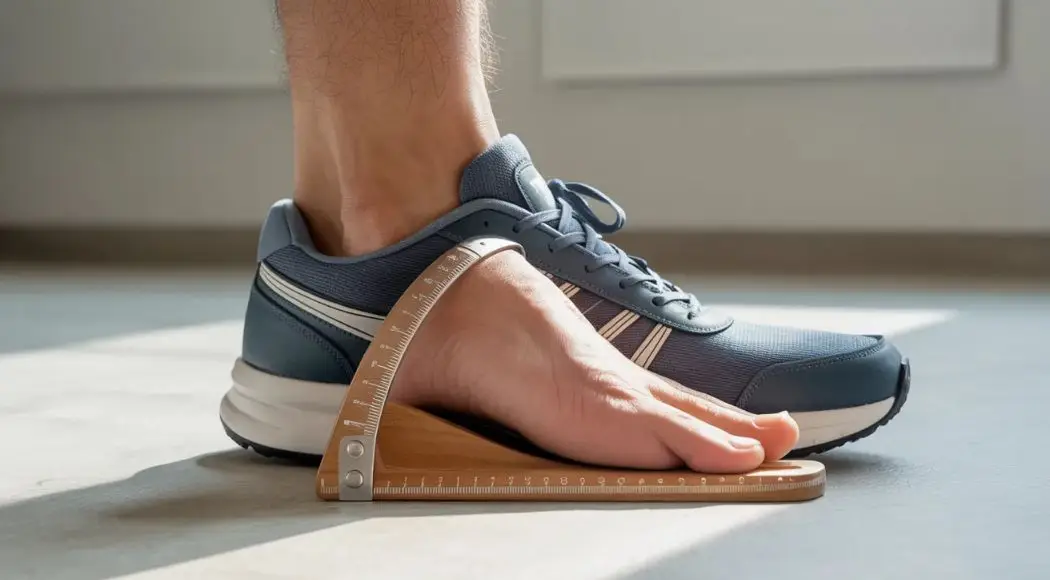
Knowing whether you need an eeee shoe size begins with accurate measurement. The most reliable method uses a Brannock Device available at most shoe stores but accurate home measurement is entirely achievable.
Step-by-Step Home Measurement Guide
- Measure at end of day Feet swell throughout the day and are at their largest in the late afternoon and evening; always measure at this time for the most accurate fit assessment
- Stand, do not sit Weight-bearing spreads the foot; sitting measurements underestimate true foot width
- Gather materials You need a sheet of plain paper, a pencil, a ruler, and a measuring tape
- Trace your foot Stand on the paper and trace around the entire foot, keeping the pencil vertical (not angled inward)
- Measure the width Identify the widest point of the tracing typically across the ball of the foot and measure the distance in inches or centimeters
- Compare to the chart Match your measurement to the brand-specific width chart for your shoe size and gender
Quick reference for men’s size 10:
| Width Measurement | Width Category |
| Under 4.0 inches | Narrow (B) |
| 4.0–4.1 inches | Standard (D) |
| 4.1–4.3 inches | Wide (E/2E) |
| 4.3–4.5 inches | Extra Wide (EEE/3E) |
| 4.5–4.8 inches | Extra Extra Wide (EEEE/4E) |
| Over 4.8 inches | Ultra Wide (6E+) |
Using a Brannock device, which measures both length and width, provides the most accurate fitting.
Why EEEE Shoe Size Popularity Is Growing in 2026
According to a report by the Footwear Industry Association, the demand for wider shoes has been increasing, prompting more brands to create styles to fit these needs.
Several converging factors explain why eeee shoe size demand has grown substantially in recent years:
- Aging population Feet change shape with age; spreading, swelling, and structural changes make wider shoes necessary for millions of people who previously wore standard widths
- Rising diabetes rates Diabetic foot care requirements drive consistent demand for therapeutic extra-wide footwear
- Orthotic adoption As custom and over-the-counter orthotic use grows, many wearers discover they need wider shoes to accommodate the insole volume
- E-commerce accessibility Online retailers now carry depth of EEEE inventory that physical stores historically could not stock
- Consumer awareness According to a survey conducted by Footwear News, 78% of consumers expressed frustration over inconsistency in shoe sizes across different brands driving more buyers to research width designations before purchasing
Top Brands Producing EEEE Shoes in 2026
Not all brands produce 4E width options, but the following have established themselves as reliable sources of quality extra-extra wide footwear:
Athletic and Running Footwear
New Balance is known for its athletic footwear. The brand offers an extensive range of sizes, including EEEE widths. According to a study by Runner’s World in 2021, New Balance shoes provide superior support and comfort, making them a popular choice among runners and casual wearers alike.
Brooks specializes in running shoes, often available in extra-wide widths. Their EEEE options are designed to enhance stability and reduce the risk of injury. A 2020 review in RunnersConnect highlighted Brooks shoes for their excellent cushioning and support, particularly for runners with wider feet.
ASICS offers a selection of performance-oriented shoes in EEEE widths, emphasizing fit and comfort for both athletic and casual use.
Therapeutic and Comfort Brands
- New Balance 928 and 990 Series Consistently rated among the best therapeutic extra-wide shoes for diabetic and orthopedic needs
- Drew Shoe Specialist therapeutic footwear brand; EEEE is a core width offering across most styles
- Propet Wide-width specialist with extensive EEEE catalogue across walking shoes, boots, and casual styles
- Silverts Specializes in adaptive footwear for seniors and people with mobility challenges; EEEE combined with Velcro closures and open-back designs
Where to Buy EEEE Shoes in 2026
You can purchase EEEE size shoes at various locations. Many specialty shoe stores carry wide sizes, including EEEE. Online retailers like Amazon, Zappos, and DSW also offer a wide selection of EEEE shoes. Moreover, brand-specific websites for companies like New Balance and ASICS often provide extended sizes. Local stores may also order specific sizes for you if they do not carry them in stock.
Best sources for EEEE footwear in 2026:
| Retailer | Format | EEEE Selection | Notes |
| New Balance official site | Online | Extensive | Best for athletic 4E styles |
| Zappos | Online | Very large | Free returns; excellent filtering |
| Amazon (verified brands) | Online | Large | Check seller ratings carefully |
| DSW | Online and in-store | Moderate | Seasonal stock variation |
| Orthopedic footwear specialists | In-store | Deep | Best for therapeutic needs |
| Propet official site | Online | Extensive | Wide-width specialist retailer |
| Silverts | Online | Extensive | Senior and adaptive footwear focus |
Advantages of Wearing the Correct EEEE Width
For anyone whose feet genuinely require an eeee shoe size, wearing the correct width delivers benefits that extend far beyond basic comfort:
- Prevention of blisters and skin irritation Correct width eliminates the lateral friction that generates blisters across the ball of the foot and little toe
- Reduced bunion progression Wide-width shoes do not compress the bunion joint; properly fitted EEEE footwear is one of the most cited non-surgical interventions for slowing bunion development
- Improved circulation Compressive shoes impede blood flow; 4E width shoes allow normal circulation, particularly important for diabetic patients
- Better balance and stability A shoe that fits the foot’s full width makes proper contact with the ground, improving proprioception and reducing fall risk
- Pain reduction Multiple clinical studies have confirmed that correct shoe width reduces forefoot pain, metatarsalgia, and plantar fasciitis symptoms
- Orthotic compatibility EEEE width provides the interior volume necessary to accommodate custom orthotic insoles without compromising fit
Common Mistakes When Buying Wide-Width Shoes
Many buyers who need an eeee shoe size make predictable errors that result in continued discomfort even after switching to a wider style:
- Sizing up in length instead of width Adding half or full sizes in length does not add width; it creates a shoe that is too long and still too narrow
- Assuming all brands measure identically Different manufacturers may define these widths differently. Always consult the shoe measurement chart for accurate sizing to ensure the best fit.
- Buying online without measuring first Returns are available at most major retailers, but measuring before ordering saves significant time
- Ignoring depth (volume) Foot depth is a separate dimension from width; some conditions require both extra width AND extra depth, which not all 4E shoes provide equally
- Not accounting for orthotic thickness If you wear custom orthotics, remove the factory insole before assessing fit in any shoe, as the orthotic will occupy that space
Conclusion
For anyone who has spent years wearing shoes that pinch, blister, or simply never feel quite right, understanding the eeee shoe size system can be genuinely life-changing. The difference between a D and a 4E is not cosmetic it is nearly three quarters of an inch of space that either allows your foot to function naturally or forces it into a compressed, painful position for hours every day.
Key takeaways:
- EEEE shoe size (4E) means extra-extra wide approximately 4.8 inches across the ball of the foot in a men’s size 9
- The Brannock width system dates from 1925; EEEE is the second-widest commonly available commercial designation
- Conditions commonly requiring 4E width include bunions, flat feet, diabetes, edema, hammertoes, and orthotic use
- Each width increment adds approximately 4.5mm; total difference between D and EEEE is roughly 18mm (0.7 inches)
- Top 4E brands in 2026 include New Balance, Brooks, ASICS, Propet, Drew Shoe, and Silverts
- Measure at end of day while standing for the most accurate foot width reading
- 78% of consumers report frustration with sizing inconsistency across brands always consult individual brand charts
If you suspect your feet need an eeee shoe size, start with an accurate measurement using the steps outlined above. Then visit a specialist retailer online or in-person and filter specifically for 4E width before selecting any style. The right width changes everything.