
Safest Airline Guide: Facts, Ratings And Rankings
Every time you book a flight, one question sits quietly in the back of your mind: how safe is this airline? Finding the safest airline is not just about statistics and crash records. It is about understanding how safety is measured, certified, and maintained behind the scenes so you can fly with genuine confidence.
- What Is This Carrier, and How Is Safety Measured
- The airlines In The World 2026 Full Rankings
- How Airline Safety Is Certified Behind The Scenes
- This airline by region 2026
- Airline Safety Vs. Comfort: Do Safe Airlines Fly Better
- What Most Passengers Get Wrong About Airline Safety
- How To Check Your Airline Safety Rating Before Flying
- Safest Low-Cost Airlines: Budget Does Not Mean Risky
- Comparison Table: Safety Ratings Of Top Airlines 2026
- Conclusion
- Frequently Asked Questions (FAQ)
In this complete guide, you will find the world’s leading carriers ranked for 2026, a clear explanation of how safety is actually measured, regional breakdowns, low-cost carrier safety data, and everything most travel guides leave out. If you are also comparing premium cabin experiences on these carriers, read our complete guide on Best Business Class Airlines for full cabin reviews alongside safety rankings.
What Is This Carrier, and How Is Safety Measured
Before ranking the safest airline options available in 2026, it is essential to understand how aviation safety is actually measured because most passengers only look at crash headlines and miss the full picture. Aviation safety experts use multiple independent rating systems to evaluate carriers across dozens of criteria. No single metric tells the whole story; the most reliable assessments combine several data sources.
What JACDEC Safety Score Actually Means
JACDEC, the Jet Airliner Crash Data Evaluation Centre, produces the most comprehensive airline safety index available to the public. The JACDEC Safety Index scores airlines on a scale from 0.00 to 1.00, where a score closer to 0.00 indicates the highest safety performance.
The index considers:
- Total accident history weighted by severity
- Fleet size and flight hours: larger airlines fly more, so raw accident numbers must be normalized
- Incident recency: recent accidents are weighted more heavily than older ones
- Fatality rate per flight calculated across the airline’s full operational history
A JACDEC score of 0.001 to 0.050 represents world-class safety. Carriers scoring above 0.200 have significantly elevated risk profiles compared to the safest operators.
How Skytrax Rates Airline Safety
Skytrax, best known for its annual World Airline Awards, also publishes independent airline safety ratings based on audits covering
- Cockpit and cabin crew procedures
- Safety management systems
- Fleet age and maintenance programs
- Incident reporting culture
- Regulatory compliance records
Skytrax awards a five-star safety rating to carriers that meet the highest standards across all evaluated categories. It is important to note that Skytrax safety ratings and service ratings are completely separate assessments; an airline can have excellent service but a lower safety rating, or vice versa.
The airlines In The World 2026 Full Rankings
Qatar Airways Safety Record
Qatar Airways consistently ranks among the top five safest airline options globally. The carrier holds a strong JACDEC score, maintains one of the youngest average fleet ages in the world at approximately 5.6 years, and has achieved IATA IOSA certification across its full operation.
Qatar’s safety record is particularly impressive given the scale of its network, over 160 destinations, and its rapid post-pandemic fleet expansion. The airline has recorded zero fatal accidents in its modern operational history.
Air New Zealand Safety Record
Air New Zealand regularly tops global top carrier rankings and has held the number one position in multiple independent assessments. The carrier benefits from rigorous New Zealand Civil Aviation Authority oversight, a modern fleet, and an exceptionally strong safety culture embedded at every operational level.
Air New Zealand’s proactive approach to safety reporting, encouraging crew to report near-misses without fear, is cited by aviation experts as a benchmark for the industry.
Singapore Airlines Safety Record
Singapore Airlines is synonymous with both service excellence and operational safety. The carrier has one of the lowest incident rates per flight hour of any major international airline and benefits from Singapore’s strict Civil Aviation Authority oversight.
Singapore Airlines’ engineering and maintenance division, SIA Engineering, is independently certified and handles maintenance for dozens of other carriers, reflecting the depth of technical expertise behind the airline’s safety record.
Qantas Safety Record
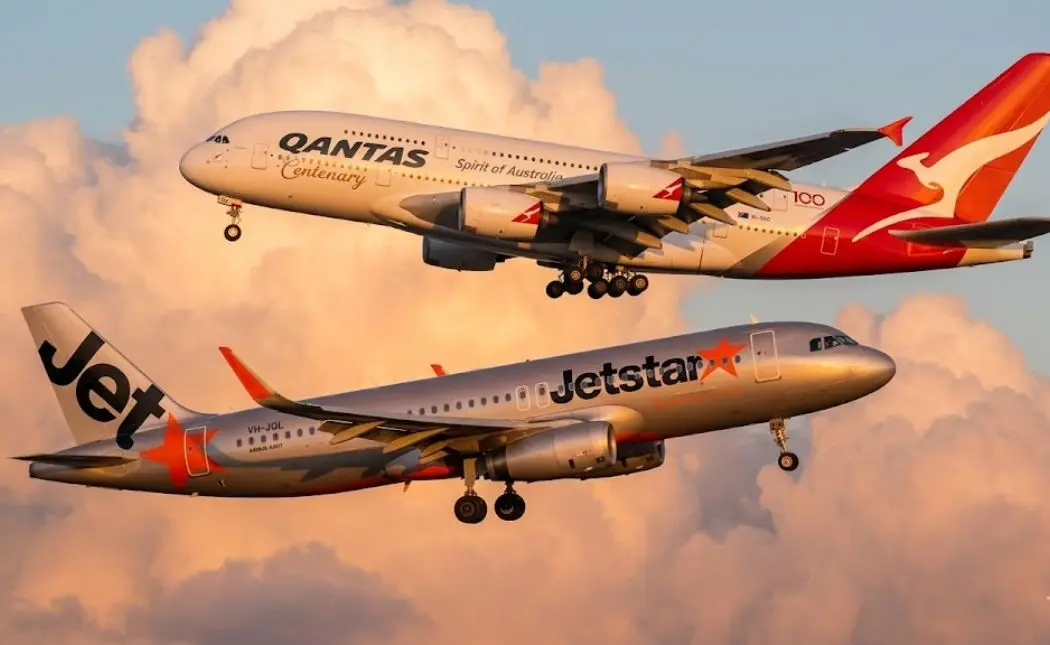
Qantas holds a unique distinction in aviation; it is the only major airline in the world never to have recorded a fatal jet accident in its history. This extraordinary record spans over 70 years of jet operations across one of the world’s longest-haul route networks.
The Australian carrier’s safety reputation is not just historical; Qantas consistently invests in crew training, aircraft maintenance, and safety management systems that place it at the top of every credible global ranking.
Emirates Safety Record
Emirates operates one of the world’s largest wide-body fleets, predominantly Boeing 777 and Airbus A380 aircraft, and maintains a strong safety record across its extensive long-haul network from Dubai. The carrier holds full IOSA certification and benefits from the UAE’s rigorous General Civil Aviation Authority oversight framework.
Emirates’ fleet uniformity, operating only two aircraft types, is itself a significant safety advantage, allowing maintenance teams and pilots to develop deep expertise in a limited number of systems.
Etihad Airways Safety Record
Etihad Airways, operating from Abu Dhabi, maintains strong safety standards consistent with its Gulf carrier peers. The airline holds IOSA certification, operates a modern fleet, and is overseen by the UAE’s General Civil Aviation Authority, the same regulator that oversees Emirates.
Etihad’s relatively younger fleet age and strong crew training program contribute to its consistently positive safety ratings across independent assessments.
Alaska Airlines Safety Record
Alaska Airlines is the highest-ranked North American carrier in most independent global safety assessments. The airline operates a predominantly Boeing 737 fleet, maintains rigorous FAA compliance, and has invested heavily in safety management systems over the past decade.
Alaska’s strong safety culture, including industry-leading crew resource management training, places it consistently above most of its North American competitors in independent safety rankings.
How Airline Safety Is Certified Behind The Scenes
Most passengers assume airlines are either safe or unsafe based on headlines. The reality is a complex, multi-layered certification system that operates continuously, not just at the time of initial approval.
FAA Certification Process
The Federal Aviation Administration, responsible for U.S. aviation safety, requires airlines to meet extensive certification standards covering:
- Aircraft airworthiness and maintenance programs
- Pilot training hours, recurrency requirements, and medical fitness
- Operations specifications covering every route and procedure
- Safety management system implementation
- Drug and alcohol testing programs for all safety-sensitive staff
FAA certification is not a one-time event; it involves continuous surveillance, unannounced inspections, and mandatory incident reporting that keeps regulators informed of operational safety in real time.
EASA Safety Standards
The European Union Aviation Safety Agency applies equivalent oversight to carriers operating within European airspace. EASA standards cover aircraft certification, crew licensing, operations, and maintenance and are widely regarded alongside FAA standards as the global benchmark for aviation safety regulation.
Airlines flying to European destinations must demonstrate EASA compliance even if they are not European-registered carriers.
IATA Operational Safety Audit (IOSA)
The IATA Operational Safety Audit is the gold standard for airline safety certification recognized globally. IOSA registration requires airlines to undergo a comprehensive audit covering the following:
- Flight operations and crew training
- Operational control and dispatch
- Aircraft engineering and maintenance
- Cabin operations and safety procedures
- Ground handling and cargo operations
- Security management systems
Over 500 airlines worldwide hold IOSA registration. Airlines without IOSA certification are considered higher-risk by aviation safety experts, insurers, and many corporate travel policies.
This airline by region 2026
The safest carriers In Asia
Asia’s aviation safety landscape has improved dramatically over the past two decades. The region’s leading carriers now consistently rank among the world’s safest:
- Singapore Airlines is consistently the safest in Southeast Asia
- ANA (All Nippon Airways) Japan’s safety culture produces exceptional results
- Japan Airlines’ strong post-accident safety transformation since 1985
- Cathay Pacific’s Hong Kong’s rigorous regulatory environment
A reliable airline In Europe
Europe benefits from EASA’s strict and consistent regulatory framework across all member states:
- Lufthansa: German engineering precision reflected in safety outcomes
- Swiss International Air Lines’ exceptional safety management systems
- KLM Royal Dutch Airlines’ strong safety record across a large global network
- British Airways’ robust safety management and modern fleet
Top-rated airlines In The Middle East
The Gulf carriers benefit from young fleets, modern facilities, and rigorous national aviation authority oversight:
- Emirates’ largest wide-body fleet, zero fatal jet accidents
- Qatar Airways’ young fleet, strong JACDEC score
- Etihad Airways’ modern fleet, full IOSA certification
This carries in America
- Alaska Airlines: consistently highest-ranked North American carrier
- Delta Air Lines’ strong safety management system investment
- United Airlines’ extensive safety programs and modern fleet
- Southwest Airlines: Despite recent scrutiny, strong overall safety record
Airline Safety Vs. Comfort: Do Safe Airlines Fly Better
One of the most consistent findings in aviation safety research is that the world’s airlines are also among the world’s best airlines for service and comfort. This is not a coincidence.
Safety culture and service culture share the same root: a commitment to doing things correctly, consistently, and with genuine attention to detail. Airlines that invest in rigorous crew training for safety also invest in crew training for service. Airlines that maintain their fleets meticulously for airworthiness also present cleaner, better-maintained cabins to passengers.
Qatar Airways, Singapore Airlines, ANA, and Emirates appear at the top of both safety rankings and service rankings consistently. If you are looking for airlines that combine exceptional safety with outstanding premium cabin experiences, read our detailed guide on Best Business Class Airlines where these same carriers are reviewed in full.
What Most Passengers Get Wrong About Airline Safety
Most people assess airline safety based on the wrong information. Here is what the data actually shows:
Myth 1: Newer Airlines Are More Dangerous. Fleet age matters, but a well-maintained older aircraft is safer than a poorly maintained new one. Maintenance culture, not age alone, determines safety.
Myth 2: Bigger Airlines Are Safer Size does not equal safety. Several smaller regional carriers in New Zealand, Australia, and Scandinavia consistently outperform much larger global airlines in safety rankings.
Myth 3: Western Airlines Are Always Safer This was true historically, but Asian carriers, particularly Japanese and Singaporean airlines, now regularly outperform many Western counterparts in independent safety assessments.
Myth 4: If Nothing Bad Has Happened, It Is Safe. Aviation safety experts focus on the systems and processes in place, not just the absence of accidents. An airline with no accidents but poor safety management systems is considered higher risk than one with robust systems and a minor incident history.
How To Check Your Airline Safety Rating Before Flying
Before your next flight, use these resources to verify your carrier’s safety standing:
- JACDEC.de: Search your airline’s safety index score and full accident history
- AirlineRatings.com independent seven-star safety and product ratings
- Skytrax.com safety and service ratings with audit methodology explained
- IATA.org verifies whether your airline holds current IOSA registration
- FAA.gov / EASA.europa.eu check regulatory compliance status for U.S. and European carriers
Safest Low-Cost Airlines: Budget Does Not Mean Risky
One of the most persistent myths in aviation is that low-cost carriers are inherently less safe than full-service airlines. The data does not support this.
Low-cost carriers operate under identical regulatory requirements as full-service airlines. FAA, EASA, and national aviation authorities apply the same airworthiness and operational standards regardless of ticket price.
Consistently safe low-cost carriers:
- EasyJet: full EASA compliance, strong safety record in Europe
- Ryanair, despite its reputation for controversy, holds a strong safety record
- Southwest Airlines’ decades of safe operations despite recent operational challenges
- IndiGo (India) IOSA certified, strong safety management for its fleet size
- Wizz Air’s young fleet, EASA-certified, strong safety audit results
The key differentiator is not price it is regulatory compliance and safety management culture.
Comparison Table: Safety Ratings Of Top Airlines 2026
| Airline | JACDEC Rank | IOSA Certified | Fatal Jet Accidents | Fleet Age | Safety Rating |
| Air New Zealand | Top 3 | Yes | 0 (jet era) | 7.2 years | Excellent |
| Qantas | Top 5 | Yes | 0 (jet era) | 10.1 years | Excellent |
| Qatar Airways | Top 5 | Yes | 0 | 5.6 years | Excellent |
| Singapore Airlines | Top 5 | Yes | 1 (1997) | 6.8 years | Excellent |
| ANA | Top 10 | Yes | 0 (recent) | 8.1 years | Excellent |
| Emirates | Top 10 | Yes | 0 | 7.3 years | Very Good |
| Lufthansa | Top 10 | Yes | Low | 12.4 years | Very Good |
| Alaska Airlines | Top 15 | Yes | Low | 11.2 years | Very Good |
| British Airways | Top 20 | Yes | Low | 13.1 years | Very Good |
| Etihad Airways | Top 15 | Yes | 0 | 8.7 years | Very Good |
Conclusion
Choosing a trusted carrier is about more than avoiding headlines; it is about understanding the systems, certifications, and cultures that keep passengers safe every single day. The world’s top airline in 2026 is not a single carrier but a group of airlines that consistently prioritize safety management above all else.
Key Takeaways:
- Air New Zealand, Qantas, Qatar Airways, and Singapore Airlines consistently top global safety rankings
- JACDEC score, IOSA certification, and fleet age are the most reliable safety indicators
- Low-cost carriers are not inherently less safe; regulatory compliance is what matters
- Safety culture and service culture are deeply connected; thus, the carriers are often the best airlines
- Always verify your carrier’s safety status before flying using JACDEC, AirlineRatings, and IATA resources
For more travel guides and flight reviews, visit OfferedMagazine.
Frequently Asked Questions (FAQ)
Which Is The Airline In The World In 2026?
Air New Zealand, Qantas, and Qatar Airways consistently top global safety rankings in 2026. All three hold IOSA certification and have recorded zero fatal jet accidents in their modern operational history.
How Is Airline Safety Measured?
Safety is measured using JACDEC scores, IOSA certification status, fleet age, accident history, and regulatory compliance records. No single metric tells the full story; experts combine all these sources.
Are Low-Cost Airlines Safe to Fly?
Yes. Low-cost carriers operate under identical regulatory requirements as full-service airlines. EasyJet, Ryanair, and Southwest Airlines all maintain strong safety records despite lower ticket prices.
What Is IOSA Certification?
IOSA is the IATA Operational Safety Audit, the global gold standard for airline safety certification. Airlines holding IOSA registration have passed comprehensive audits covering all aspects of flight operations and maintenance.
How Can I Check My Airline Safety Rating?
Visit JACDEC.de for safety index scores, AirlineRatings.com for independent seven-star ratings, and IATA.org to verify IOSA certification status before booking any flight.