What is Backlight Unit Lens Technology? Patents, Design & Working Explained
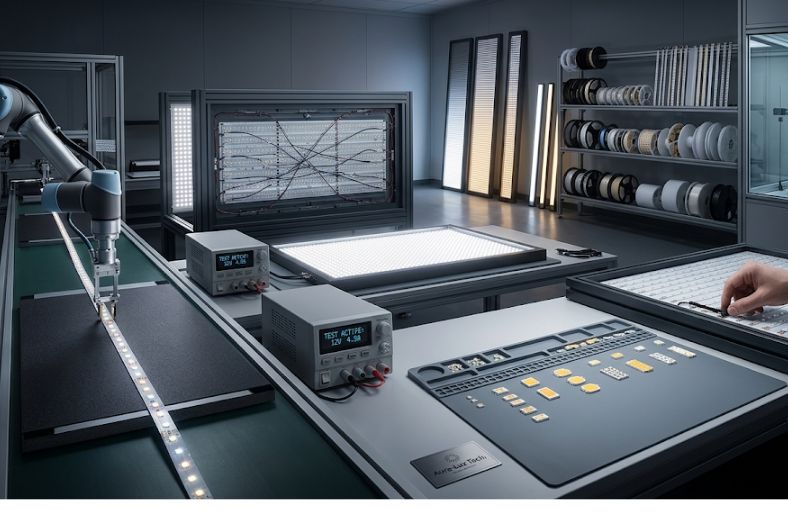
Every time you look at a bright, evenly lit LED screen or a well-designed light fixture, there’s a good chance a small but powerful component is working behind the scenes — the backlight unit lens. This tiny optical part plays a massive role in how light is distributed, diffused, and directed in displays and lighting systems alike.
- What is a Backlight Unit (BLU)?
- What is Backlight Unit Lens Technology?
- How Does Backlight Unit Lens Technology Work?
- Why is Lens Design So Important in Backlight Units?
- The Role of Patents in Backlight Unit Lens Technology
- Backlight Unit Lens Technology in Everyday Lighting
- Future Trends in Backlight Unit Lens Technology
- Conclusion
- Frequently Asked Questions (FAQs)
In this blog, we’ll break down what backlight unit lens technology actually is, how it works, why it matters in modern design, and what role patents play in protecting and advancing this technology. Whether you’re a student, an engineer, or simply curious about how your favorite gadgets light up so evenly, this guide will walk you through everything in simple terms.
What is a Backlight Unit (BLU)?
A Backlight Unit, commonly known as BLU, is the lighting system placed behind an LCD (Liquid Crystal Display) panel. Since LCD panels don’t emit their own light, they rely entirely on a backlight source — usually LEDs — to illuminate the screen from behind.
The backlight unit typically consists of:
- A light source (LEDs in most modern devices)
- A light guide plate (LGP) that spreads light evenly
- Diffuser sheets that soften and scatter light
- Reflector sheets that redirect stray light forward
- Lenses that shape and control how light spreads from each LED
Without proper light control, you’d see bright spots directly above each LED and darker areas in between — a problem known as the “hotspot effect.” This is exactly where lens technology steps in.
What is Backlight Unit Lens Technology?
Backlight unit lens technology refers to the design and engineering of small optical lenses placed directly over individual LEDs within a backlight unit. These lenses are responsible for redirecting and spreading light at specific angles so that illumination across the entire display or panel remains smooth, uniform, and free of dark or bright patches.
In simple terms, think of each LED as a tiny flashlight. Without a lens, the light would shine in a narrow, concentrated beam. A backlight unit lens takes that narrow beam and “spreads” it wider and more evenly — almost like turning a spotlight into soft, ambient lighting.
This technology is widely used in:
- LCD TVs and monitors
- Laptop and smartphone screens
- LED signage and digital displays
- General LED lighting fixtures, including products similar to Lamps4u light solutions used in modern interior and architectural lighting
How Does Backlight Unit Lens Technology Work?
The working principle of a BLU lens revolves around optical refraction and light redistribution. Here’s a simplified breakdown:
1. Light Emission
The LED emits light in a relatively narrow cone, usually concentrated directly above the chip.
2. Light Entry into the Lens
The lens, usually made of optical-grade silicone or polycarbonate, is mounted directly over the LED. As light enters the lens material, it bends due to refraction.
3. Light Redirection
The internal curvature and structure of the lens — which may include concave surfaces, total internal reflection (TIR) zones, or micro-textured patterns — redirect the light outward at wider angles instead of letting it travel straight up.
4. Even Light Distribution
This redirected light spreads across a larger surface area, reducing the intensity of the hotspot directly above the LED while increasing brightness uniformity across the panel.
5. Final Diffusion
After passing through the lens, light travels through diffuser sheets and the light guide plate, further smoothing it out before reaching the display panel or surface.
The end result is a screen or lighting surface that looks evenly lit, without visible bright rings or dark gaps — even when individual LED spacing is wide.
Why is Lens Design So Important in Backlight Units?
The design of a backlight unit lens directly impacts:
- Brightness uniformity – Poor lens design leads to visible hotspots
- Energy efficiency – Well-designed lenses allow fewer LEDs to cover more area, reducing power consumption
- Thinner displays – Wide-angle lenses allow for thinner light guide plates, enabling slim-profile TVs and monitors
- Color consistency – Even light spread reduces color shifting across the screen
- Manufacturing cost – Fewer LEDs needed per panel due to better light spread
This is why companies investing in display technology and lighting solutions — including general lighting brands working with Lamps4u light style products — pay close attention to lens geometry, material selection, and light angle distribution.
The Role of Patents in Backlight Unit Lens Technology
Because backlight unit lens design directly affects display quality, manufacturing cost, and energy efficiency, it has become a heavily patented area of optical engineering. Companies continuously file patents to protect:
1. Lens Shape and Geometry
Patents often cover specific curvature designs — such as concave-convex hybrid lenses, asymmetric lenses, or multi-zone lenses — that control how light spreads in particular directions.
2. Total Internal Reflection (TIR) Structures
Many patents focus on internal lens structures that use TIR to bend light at extreme angles, which is especially useful in ultra-thin displays.
3. Material Composition
Patents may also protect specific optical materials or coatings used in lens manufacturing that improve light transmission, reduce yellowing over time, or enhance durability.
4. Multi-LED Lens Arrays
Some patents cover lens designs that work with closely packed LED arrays, allowing manufacturers to reduce the number of LEDs needed while maintaining uniform brightness — a major cost-saving innovation.
5. Manufacturing Methods
Beyond the lens design itself, many patents cover the process of manufacturing these lenses — including injection molding techniques and precision alignment methods — since consistency at scale is just as important as the design itself.
Patent activity in this space has grown significantly alongside the rise of Mini-LED and Micro-LED display technologies, where smaller LEDs and tighter spacing make precise lens design even more critical.
Backlight Unit Lens Technology in Everyday Lighting
While much of this discussion centers around displays, the same core principles apply to general LED lighting. Modern lighting fixtures — similar to what you’d find in Lamps4u light product lines — also use lens technology to:
- Spread light evenly across a room instead of creating harsh circular patterns
- Reduce glare for more comfortable indoor lighting
- Improve energy efficiency by maximizing usable light output per LED
- Create specific lighting effects, such as wide-beam ambient lighting or focused task lighting
This crossover between display technology and general lighting shows just how foundational backlight unit lens engineering has become across multiple industries.
Future Trends in Backlight Unit Lens Technology
As display and lighting technology continues to evolve, a few trends are shaping the future of BLU lens design:
- Mini-LED and Micro-LED integration – Requiring even more precise, compact lens designs
- Local dimming compatibility – Lenses designed to support zone-specific brightness control
- Sustainable materials – A shift toward eco-friendly, long-lasting optical materials
- AI-assisted optical design – Using simulation software to test thousands of lens shapes virtually before manufacturing
These advancements will likely lead to even thinner displays, brighter and more efficient lighting fixtures, and continued growth in patent filings as companies race to protect their innovations.
Conclusion
Backlight unit lens technology may be a small, often overlooked component, but it plays a critical role in how modern displays and lighting systems perform. From reducing hotspots on your TV screen to enabling soft, even lighting in homes and offices, these tiny lenses make a big difference.
As the demand for thinner, brighter, and more energy-efficient displays and lighting grows, so too will the innovation — and patent activity — surrounding backlight unit lens design. Whether it’s in cutting-edge display panels or everyday lighting solutions, understanding this technology gives valuable insight into the engineering behind the light we see every day.
Frequently Asked Questions (FAQs)
Q1. What is the main purpose of a backlight unit lens? The main purpose is to spread and redirect light from an LED evenly across a display or surface, reducing hotspots and improving overall brightness uniformity.
Q2. What materials are commonly used to make BLU lenses? Most backlight unit lenses are made from optical-grade silicone or polycarbonate, chosen for their light transmission properties and durability.
Q3. How does lens technology improve display thinness? Wide-angle lenses spread light more efficiently, which reduces the distance needed between the LED and the display panel, allowing manufacturers to design thinner screens.
Q4. Why are backlight unit lenses patented so heavily? Because lens design directly affects display quality, cost, and energy efficiency, companies patent specific shapes, structures, and manufacturing methods to protect their competitive advantage.
Q5. Is backlight unit lens technology only used in TVs and monitors? No, this technology is also widely used in general LED lighting fixtures to achieve even light distribution and reduce glare in everyday lighting products.
Q6. What is the difference between a BLU lens and a light guide plate? A BLU lens shapes and spreads light directly from the LED source, while the light guide plate further distributes that light across the entire panel surface.
Q7. How does Mini-LED technology affect lens design? Mini-LED displays use smaller, more densely packed LEDs, requiring more precise and compact lens designs to maintain uniform brightness without increasing display thickness.